
HIGHER IDEALS
Essays & Commentary on American History, Ideas, and Institutions
Essays & Commentary on American History, Ideas, and Institutions
I believe democracy depends upon informed and engaged citizens. A free society cannot function if its citizens are unwilling to understand how their government works, participate in civic life, or hold institutions accountable.
The problem with self-government however is the assumption that the people are motivated to be informed and involved. Citizens are not merely observers of government. They are an essential part of it. Voting, advocacy, civic engagement, and public discourse are not optional features of democracy; they are the mechanisms by which democracy survives. Citizens, legislators, and public officials alike must be educated and informed if democracy is to function effectively. Truly, an informed and educated citizenry makes for a better government and a good government makes for an informed citizenry.
It was Benjamin Franklin who once wrote, “Government must depend for its Efficiency either on Force or Opinion.” [From ‘The Colonist’s advocate’, VII. (Feb 1, 1770)]. In essence, Franklin knew that in order for democracy generally, or government broadly to operate properly, either citizens need to exercise their rights in order to govern government, or government will eventually govern by force. Franklin understood that government ultimately rests on either public consent or coercion.
Whether one examines the American Civil War, the struggles of Reconstruction, the Civil Rights Movement, or modern debates over governmental authority, the underlying question remains the same: how should a free people govern themselves? That question cannot be answered by an uninformed public. It requires citizens who understand both the principles and the history that shaped the institutions they seek to preserve.
History repeatedly demonstrates the truth of this observation. Abraham Lincoln preserved the Union through the use of governmental force during the Civil War. Most Americans today view that use of force as justified, even necessary. Yet history also provides countless examples of governments using the same power for destructive ends.
The lesson is not that force is always right or always wrong. Rather, it is that government possesses powers capable of both protecting liberty and threatening it. Determining when those powers are being exercised legitimately requires an informed and engaged citizenry. Citizens who do not understand the history, principles, and consequences involved cannot effectively govern themselves, nor can they hold government accountable for the decisions it makes. A free society survives only when citizens remain engaged enough to govern themselves.
Franklin himself noted the fear of citizens being willing to sacrifice personal liberty to the government in times of fear. He understood people would be willing to trade these rights to feel temporarily safe. The warning he gave was clear, “Those who would give up essential Liberty, to purchase a little temporary Safety, deserve neither Liberty nor Safety". Understanding where legitimate government authority ends and the infringement of liberty begins is precisely why an informed citizenry is necessary.
Franklin also wasn’t naive to what the American experiment was facing either. He knew that what they had set out to create had never really been done before in human history. Franklin quipped at the Constitutional Convention, "a republic, if you can keep it." He understood that an informed and involved citizenry was the only way this experiment would succeed.
For this reason, I believe civic education is one of the most important responsibilities of a democratic society. Citizens cannot effectively protect institutions they do not understand, nor can they make informed decisions without understanding the principles upon which those institutions were built. They additionally cannot be expected to effectively participate if they do not have the knowledge needed to participate. Too often citizens do not have the basic knowledge needed to understand where to contact their local representatives, which bills are being debated and how those bills will affect themselves. Many citizens are not even familiar with the basic processes through which government operates.
It is this fact that encompasses perhaps the central purpose of this publication. The purpose of this publication is to create a place where citizens can better understand the events affecting their daily lives, what is or should be done about it and my perspective on what is going on. If I can also compare and contrast that with past events, all the better. The goal is to build a better, more informed citizenry. Not out of charity, but because a rising tide lifts all ships. What's good for the community can only be good for me as well. This reflects an important strand of thought among many of the founders, and that vision shaped their view on government and society’s interconnected relationship.
Democracy is not self-sustaining. Every generation inherits it, but every generation must also actively maintain it.
I believe government exists to serve the people rather than the other way around. Its purpose is to protect rights, create opportunity, provide stability, and ensure that all citizens operate under a fair and consistent set of rules.
Thomas Jefferson once argued that no generation has the right to permanently bind future generations to its decisions. He wrote: "Every constitution then, and every law, naturally expires at the end of 19 years. If it be enforced longer, it is an act of force, and not of right."
Whether one agrees with Jefferson's specific timeline is beside the point. The larger principle remains compelling. Government exists to serve living citizens, not the other way around. Institutions should be respected, but they should not be immune from criticism or reform. A healthy republic preserves what works while remaining willing to improve what does not.
For that reason, I believe government must be both stable and adaptable. Stability provides confidence and continuity. Reform ensures that government remains responsive to the people it exists to serve.
Additionally, government should act as a referee, balancing competing interests while protecting the common good. It should safeguard both individual liberty and the public interest, ensuring that neither concentrated wealth nor concentrated political power overwhelms democratic institutions.
In the wealthiest nation in history, basic necessities such as education, healthcare, and economic opportunity should not be reserved for the fortunate few. Government possesses a unique ability to address collective problems that no individual citizen or private organization can effectively solve alone. As such, we need citizens willing and able to dedicate themselves to helping the common cause. To that end it is understandable that we need to empower those who heed the call to service. This is true of the veterans who put themselves in danger every day to protect our freedom, and it may be equally true of those we choose to empower with the responsibility to make the rules we decide to live by. Conversely, we must guard against entrenching a chosen few with the power to manipulate the gears of government for too long.
Officials who spend too long in government and consolidate too much power, however dedicated they may be to the public, risk becoming the very danger our founders fought to throw off and free themselves from. Our public officials should not view public service as a career path meant to be obtained. Public service should be a calling, something someone does because they feel a need to do it despite the sacrifice to themselves it might require.
The purpose of government is not to accumulate power. Its purpose is to improve the lives of the people it serves. We as a society must put in place checks to ensure that those whom we entrust with the most, do not abuse that trust and if/when they do there must be consequences. It is not unreasonable to expect those elected officials to be held to a higher standard than the average citizen.
Putting it simply, it is the stated right of every American to have the opportunity to “the pursuit of happiness”. Government exists to provide every American a fair and reasonable opportunity to pursue that happiness.
Power, whether political, economic, or institutional, must always be subject to accountability. In my view, higher accountability even than the average citizen. The more trust, power, and responsibility given, the higher the standard should be. I do not think it all that unreasonable to expect the President to be held to a higher standard than the average warehouse worker trying to make it through their day. If we as a society are not only going to grant the President the esteem, power and trappings of his position, not to mention all of the benefits that might come with the office, then he should be expected to act above reproach. As popular culture has repeatedly reminded us, "with great power comes great responsibility." While the phrase may come from a comic book, the principle itself is as old as republican government. And to that end, society should hold those who abuse or misuse that power and authority to account. Without that accountability, democracy cannot survive.
Healthy democracies rely upon systems of checks and balances. Formal institutions, a free press, civic organizations, and an engaged citizenry all play a role in ensuring that power remains accountable to the public.
History repeatedly demonstrates that concentrated power, when left unchecked, eventually places its own interests ahead of those it was created to serve. For this reason, democratic societies must remain vigilant in defending transparency, oversight, and public participation.
Accountability is not an obstacle to effective government. It is one of the conditions that makes effective government possible.
The founders believed service to the nation was a calling. Citizens should want to better their communities and the only way to ensure that would be to participate in government. Whether that be elected office, military service, jury duty or even volunteering to help your neighbors, the participation of every citizen is required to be able to guarantee the survival of any democracy. Even the simple act of voting, for which many of us take for granted, demonstrates a willingness from the citizen to participate and voice their opinion in order to make changes in hopes of bettering everyone’s situation.
Additionally, we today should want to leave the nation better than was left to us. Generally, the founding generation in part fought to leave their descendants a perceived freer country. The next generation debated and fought to make “all men equal”, specifically from bondage. My grandfather’s generation fought to end fascism and my parent’s generation fought the encroachment of communism. My generation is fighting to preserve the institutions and freedoms previous generations struggled to secure. Even today, we continue to wrestle with fundamental questions of citizenship and civic belonging. Citizenship is not merely a legal status. It carries with it responsibilities, obligations, and participation in the continued maintenance of the republic. Thus, debates over immigration, naturalization, and birthright citizenship demonstrate the ever-evolving view and status of citizenship in America and what that citizenship means.
The hope is that the next generation can have the opportunity to build a better world, rather than rebuild from the cinders left behind. That can only happen if we and they are able to perform the duties and responsibilities that productive government requires. Not to make us rich and powerful, but because our morals dictate it.
I believe public service should be viewed as a responsibility rather than a pathway to wealth, status, or personal power.
Government functions best when those who seek office or public influence view themselves as stewards of institutions rather than owners of them. Public officials should be measured not by their ability to enrich themselves or retain power, but by their ability to improve the lives of the people they represent.
Leadership requires both competence and integrity. The health of democratic institutions depends upon both.
My progressive political beliefs are not the starting point of my philosophy; they are the conclusion I arrived at through these principles. To me the most important function government can play is to foster an environment where everyone can flourish. I personally do not believe that money should be the start and end of every political discussion. It is important, I will not deny that, to flourish people cannot be subject to abject poverty. But the flip side of that is that unchecked capitalism run amok brings upon the very poverty that can crush democracy. Instead, government should be tasked with the goal of striking the right balance of defeating poverty and capping runaway wealth while also allowing for individuals to reap the benefits of hard work, talent and good luck.
I also believe that even today we as a society tend to turn our heads to the plight of many Americans not being able to afford the benefits of the sacrifices left to us by previous generations. I do not believe illness should be a pathway to financial ruin. No one should ever have to go without food. Everyone who is willing to work a 40 hour week should make enough money to own a home, take a vacation, own a car, raise children.
I also believe that the goal should ultimately be to live in a society where some day money should not prevent us from pursuing our own form of happiness. One should not be forced to not pursue a study in art simply because it pays far less that working in a factory or warehouse. Making people who are extremely wealthy even richer should not be the end goal. Having the freedom to be happy should be. Many times I find that the money in modern American society IS the goal. To me, this is backwards. The money should be the means to the end.
My political philosophy is cemented in the moral code of many of our founding fathers. I subscribe, simply, to the concept that what’s best for all tends to be what’s best for the individual. Benjamin Franklin (one of my main influences) subscribed to the idea that the best off should give back to society. Franklin started the first lending library. He was a founder of the University of Pennsylvania. He invented the lightning rod and gave the patent to society. Franklin established the first municipal fire department. These are but a few of the initiatives Franklin started because society needed answers to problems. He understood that some problems society faced could only really be solved by society. I believe this as well at my core.
During the Gilded Age, America witnessed the rise of enormous concentrations of private wealth and economic power. A small number of industrialists and corporations controlled key industries, allowing them to influence prices, wages, working conditions, and entire sectors of the economy. While economic growth benefited many Americans, it also created problems that individual workers and consumers often lacked the power to address on their own.
Theodore Roosevelt recognized that government had a legitimate role to play in protecting the public interest when economic power became too concentrated. Through trust-busting, regulatory reform, and consumer protections, he demonstrated that government could act as a counterbalance to private power when necessary.
Franklin Roosevelt faced a different challenge during the Great Depression. Faced with economic collapse, widespread unemployment, and financial instability, he believed government had a responsibility to intervene and create solutions that the market alone was unable to provide. The New Deal represented an effort to use government as a tool to restore opportunity, stability, and public confidence.
Both Roosevelts understood that some problems become so large that they require collective action. Their examples helped shape my belief that government can and should play a constructive role when confronting challenges that individuals cannot effectively solve on their own.
Why am I a progressive? Because I too tend to believe in the power of community coming together to fix big problems. I believe that government has a special ability to act on these issues quickly, and to solve them in a way that can last generations. I believe that every citizen deserves to be heard on these issues and not be subject to the whims of a few rich and/or powerful benefactors. I believe that honest, intellectual debate should be the starting point to resolving our issues and problems. I believe optimism is good, and should be rewarded.
Above I spoke about Jefferson and his belief that future generations have the right to shape government in the image that they need. Jefferson stood for government reform in the name of duty to the public. Why am I a progressive? Because I believe, like Jefferson, that government is only useful and performing its duty to the public if it is constantly moving forward with the times. I believe as a society we should always be striving to move forward while heeding the lessons of our past. In other words, I believe in progress. As a progressive I always ask the question “how can we do this better?”. This is a question I believe Jefferson asked when looking at government. This is a core aspect of Progressive political ideals, and even more than being “liberal”, it speaks to how I feel we should all be trying to operate.
I also accept that while I may not usually agree with the philosophy, there is a place for conservatism as well. There is no need to always throw out the baby with the bathwater every time a problem arises. While I more often than not disagree with the conservative view, I understand it is a view that is important to debate so long as it comes from a place of honesty and consistency. Democracy depends upon debate, disagreement, and competing ideas. A healthy republic requires ideological diversity and the willingness to engage in good-faith discussion.
That being understood, I believe government should actively work to expand opportunity, protect rights, strengthen democratic institutions, and ensure that prosperity and political influence are not reserved solely for those who already possess them. We should always strive to improve what we inherited while preserving what remains valuable.
Democracy is not a final achievement. It is an ongoing responsibility.
Every generation must decide whether it will strengthen the institutions it inherits or allow them to weaken through neglect. The work of citizenship is never complete, nor should it be.
The ultimate purpose of democratic government is not merely to preserve itself. Its purpose is to create the conditions under which free people can pursue meaningful lives, participate in their communities, and contribute to a society that is more just, more informed, and more representative than the one they inherited.
Higher Ideals exists because I believe democracy depends upon informed citizens. It exists because I believe civic education matters. It exists because I believe ordinary people should understand the institutions that shape their lives and feel empowered to participate in them. I believe people should possess the knowledge necessary to understand the events shaping their lives and the institutions that govern them.
I do not expect readers to agree with every conclusion I reach. In fact, healthy democracies depend upon disagreement, debate, and the free exchange of ideas. What I do hope is that readers leave more informed than when they arrived, more curious than when they began, and more willing to engage with the responsibilities that citizenship requires.
Democracy is not maintained by politicians alone. It is maintained by millions of citizens making the conscious decision to remain informed, participate in their communities, and hold their institutions accountable. Every generation inherits a republic. Every generation must decide what it will do with it.
If Higher Ideals can play even a small role in helping citizens better understand that responsibility, then it will have accomplished exactly what it was created to do.
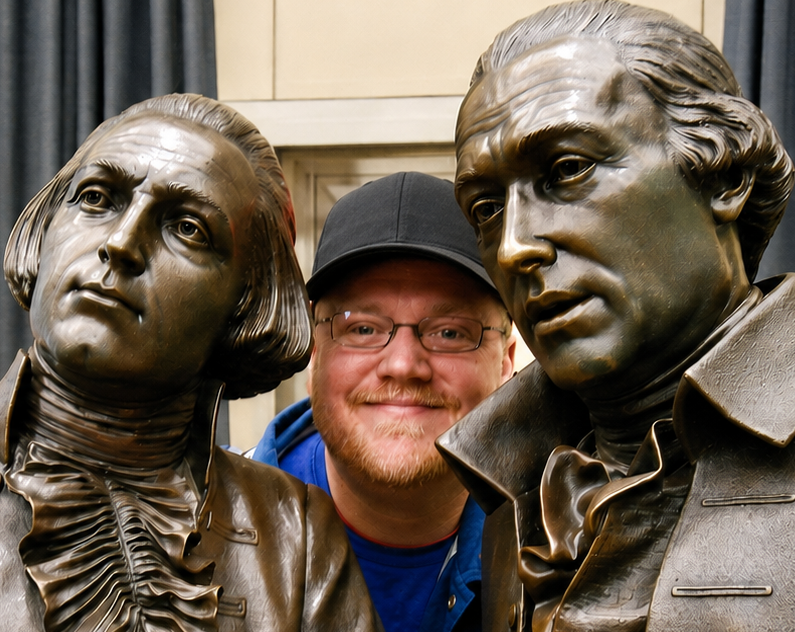
Edward A. Wilson is a Political Science graduate, writer, civic advocate, and founder of Higher Ideals. His work focuses on American history, democratic institutions, public policy, and civic engagement. Through Higher Ideals, he explores the ideas, principles, and responsibilities that sustain a healthy democracy.
A historical examination of the Electoral College, its original purpose, its impact on modern elections, and the debate over whether it still serves American democracy.