CANCEL CULTURE
Why You May Not Know It’s an American Tradition
Not All Power Is the Same
So far, we have mostly been talking about what Americans do to one another. We have boycotted businesses, protested governments, pressured institutions, condemned political opponents, organized movements, circulated propaganda, and tried to persuade our fellow citizens that the people on the other side were wrong. None of that is new. What is different about the modern era is how many different kinds of power can now operate simultaneously, often within minutes, and how easily one form of power can become another.
That distinction matters because we often use the word “power” as though it describes one thing. It does not. The power possessed by an individual is different from the power of a million consumers acting together. The power of a corporation is different from the power of a political party. The power of a private organization is different from the power of a government. These forms of power can overlap, reinforce one another, and sometimes become difficult to distinguish, but they are not interchangeable.
Consider a simple example. You decide that you do not like a particular musician, so you stop listening to their music. You tell your friends why you stopped listening, and some of them make the same decision. Now you have collective pressure. An organization begins encouraging people to boycott the musician, and businesses begin reconsidering whether they want to work with them. Institutional power has entered the picture. Finally, imagine the government deciding that the musician's political views are unacceptable and using its legal authority to punish them. The underlying disagreement may be identical, but the power being exercised is fundamentally different.
This is why the phrase “cancel culture” can become so imprecise. It can describe anything from one person deciding not to watch a television program to thousands of people demanding that someone lose their job, or even allegations that government officials attempted to pressure a private institution into taking action. Those situations may share a common desire to impose consequences, but the consequences, mechanisms, legal questions, and constitutional implications are not the same.
The First Amendment makes this distinction especially important. The Constitution restricts government from abridging protected speech, religion, press, assembly, and petition. It does not generally require private citizens to listen to one another, require private companies to associate with particular speakers, or guarantee that every private institution must provide someone with a platform. At the same time, private power is not unlimited; other laws can restrict discrimination, retaliation, threats, harassment, and other forms of conduct. The legal question therefore cannot simply be, “Was someone canceled?” It has to be: Who acted, what did they do, and what authority did they have to do it?
That is a question Americans should ask more often.
We have become accustomed to thinking about political arguments in terms of winners and losers. If someone loses a job because of something they said, one side may call it accountability while the other calls it censorship. If a company removes a product, one side may call it a consumer victory while the other calls it intimidation. If a government official pressures an institution to take action, supporters may describe it as legitimate oversight while critics may describe it as an abuse of power.
The labels can come later.
First, identify the power.
Individual Power
The smallest unit is also the most fundamental: the individual.
You can decide what to buy. You can decide what to watch. You can refuse to attend an event. You can criticize a public figure. You can tell other people what you think. You can organize with people who agree with you.
Those choices are part of living in a free society.
They can also have consequences for other people.
If enough individuals make the same decision, their individual choices can become collective economic or political pressure. That does not automatically make the pressure illegitimate. In fact, much of the history we have already examined depends upon individuals discovering that they possess more power when they act together.
The American Revolution could not have happened through individual choices alone. Neither could the abolitionist movement, the labor movement, women's suffrage, the Civil Rights Movement, or the modern protest movements we have examined.
Collective power is one of the ways ordinary citizens participate in democracy.
Collective Power
There is nothing inherently sinister about collective power.
A thousand people signing a petition have more political influence than one person signing it. A thousand customers refusing to buy a product can have a greater economic effect than one customer doing so. A thousand people marching outside a government building will probably attract more attention than one person standing there alone.
This is precisely why Americans have organized for centuries.
But collective power can also become coercive. The question is not simply how many people are involved. It is what they are doing and what pressure they are applying.
A boycott that says, “We will not purchase your product,” is different from a threat that says, “Do what we demand or we will harm you.” A protest that blocks traffic may be disruptive and potentially unlawful depending on the circumstances, but that is different from physically attacking someone. A campaign criticizing a person's speech is different from making a credible threat against that person.
Scale does not erase these distinctions.
A million people can still be wrong. A single person can still be right. And neither proposition tells us by itself whether the method being used is lawful or appropriate.
Institutional Power
Then there is institutional power.
A corporation can decide whether to employ someone. A university can establish rules for its campus. A television network can decide which programs it broadcasts. A professional organization can establish standards for membership. A social-media platform can create rules governing what users may post.
These institutions can affect people's lives enormously.
That makes institutional decisions politically important even when they are not government decisions.
It also creates one of the central tensions in the modern cancel-culture debate. We want private institutions to have freedom of association and control over their own operations. At the same time, we sometimes become uncomfortable when those institutions exercise that freedom against people whose speech we support.
The temptation is to apply constitutional language to every private dispute.
But constitutional rights and personal preferences are not the same thing.
You may believe someone should be allowed on a particular platform without claiming that the Constitution requires the platform to host them. You may believe someone should not be fired for expressing a political opinion without claiming that every private employer is constitutionally prohibited from doing so. And you may believe a corporation made a terrible business decision without believing the government should force the corporation to reverse it.
These distinctions do not settle the moral questions.
They make the questions clearer.
There is also a principle running underneath all of this: people and institutions generally have a right to decide what they will associate with, support, purchase, publish, or participate in. That freedom matters because a free society cannot require everyone to embrace everyone else's choices. But that principle has limits as well. Private power remains subject to law, and the fact that an action is private does not make every use of that power legitimate.
Government Power
Finally, there is government.
Government has powers that ordinary citizens and private institutions do not possess. It can enforce criminal laws. It can impose taxes. It can regulate conduct. It can compel compliance with legally valid orders. Under certain circumstances, it can deprive a person of liberty or property through established legal processes.
That is why government action deserves a different level of scrutiny.
If a private citizen says, “I don't want to hear what you have to say,” you can walk away. If a corporation says, “We aren't going to publish your book,” you can seek another publisher. If a government says, “You are prohibited from expressing this political opinion,” the stakes are different.
The First Amendment exists in part because the government possesses this kind of power. The American constitutional system places particularly strong protections around political speech because political participation depends upon the ability to criticize those who exercise governmental authority.
That does not mean government can never regulate conduct associated with speech. It does mean government cannot simply treat political disagreement as sufficient justification for suppressing constitutionally protected expression.
And that brings us to one of the most revealing tests in American history.
What happens when the person with the power to punish political enemies believes that those enemies deserve it?
For that, we need to talk about Richard Nixon.
The Nixon Test
If there is one period in modern American history that demonstrates why the distinction between private pressure and government power matters, it is the Nixon era.
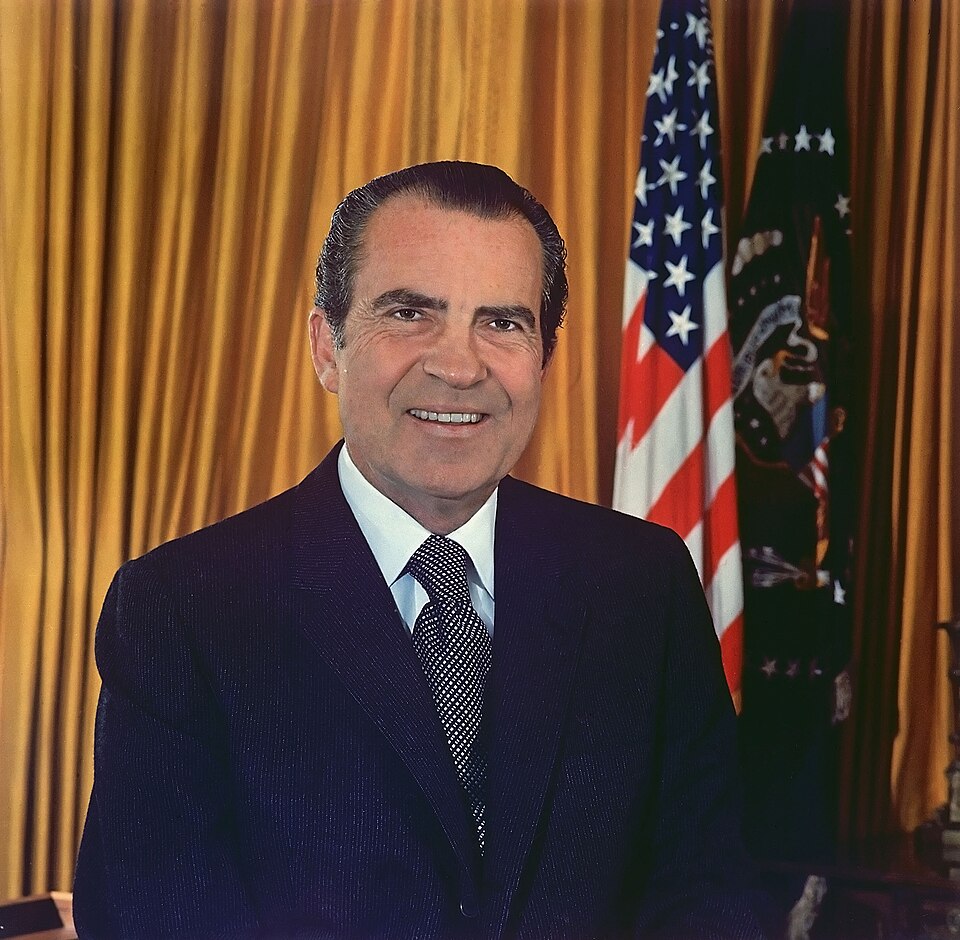
Richard Nixon did not invent political enemies. American presidents before him had opponents, critics, hostile newspapers, and political organizations they disliked. What makes the Nixon years especially useful for this discussion is the documented evidence of efforts within the administration to investigate, discredit, intimidate, and otherwise pressure perceived political opponents and critics. National Archives records concerning Watergate include material relating to the so-called “Enemies List,” investigations involving political opponents, the misuse of the Internal Revenue Service, and the activities of the White House “Plumbers.”
That history gives us a useful test.
Imagine that a private citizen dislikes a newspaper. They stop subscribing. They tell their friends why. They organize a boycott. They publicly criticize the paper. They encourage advertisers to reconsider doing business with it. Whatever we think of the campaign, these are fundamentally exercises of private or collective power.
Now change one thing.
The president of the United States dislikes the newspaper and uses the machinery of government to investigate its owners, target its tax status, threaten its business relationships, or otherwise use official authority against it because of its political opposition.
The disagreement has not changed.
The power has.
That is the Nixon Test.
The Enemies List
The phrase “Enemies List” has become shorthand for an entire period of political retaliation, but the historical record is more complicated than the phrase sometimes suggests. National Archives records document White House efforts involving perceived political enemies, including material concerning the IRS and particular individuals and organizations. The records reflect a broader effort by people within the administration to gather information and consider ways of applying governmental and political pressure.
That distinction actually makes the episode more useful for our purposes.
Government power rarely announces itself by saying, “We are now abusing our power.”
It usually arrives wrapped in an argument.
There is a security concern.
There is an investigation.
There is a legitimate regulatory question.
There is a national interest.
There is a reason these people deserve scrutiny.
Sometimes those reasons are legitimate. Governments really do have legitimate investigative and regulatory responsibilities. The problem begins when those powers are used selectively because officials want to punish political opposition rather than enforce the law impartially.
That is why both motive and mechanism matter.
Daniel Ellsberg and the Pentagon Papers
The Pentagon Papers provide another important example.
In 1971, Daniel Ellsberg, a former Defense Department analyst, provided portions of a classified Defense Department study of the Vietnam War to the press. The New York Times began publishing excerpts, and the Nixon administration sought to prevent further publication. The dispute eventually reached the Supreme Court in New York Times Co. v. United States, where the Court rejected the government's attempt to impose prior restraint on publication.
But the story did not end with the courtroom.
The Nixon administration created a secret unit commonly known as the “Plumbers,” initially in response to concerns about national-security leaks. The unit became involved in efforts surrounding Ellsberg, including the break-in at the office of his psychiatrist. National Archives records document the unit and records relating to its investigation.
This is where the distinction between government power and private retaliation becomes impossible to ignore.
A private citizen can be furious that someone leaked classified information. A newspaper can decide not to publish that person's work. A political organization can condemn the leaker.
But the government possesses investigative and coercive powers that those private actors do not. When those powers are directed against political opponents or critics, the constitutional stakes become fundamentally different.
The Problem Isn't That Nixon Had Enemies
It would be easy to turn this into a story about one uniquely vindictive president.
That would actually make the historical lesson weaker.
The important question is not whether Richard Nixon personally disliked his political opponents. Presidents are politicians. Of course they have opponents.
The important question is what happens when political hostility reaches the machinery of government.
The American system assumes that government power cannot simply become the personal property of whoever happens to control the White House. Elections determine who exercises government authority, but elections do not give the winner unlimited authority to use that power against political enemies.
That is one reason Watergate became a constitutional crisis rather than merely an ugly political fight. The National Archives describes Watergate as a national trauma and constitutional crisis involving the presidency, the media, Congress, the courts, executive agencies, and the rule of law. Nixon ultimately resigned in 1974.
The lesson is larger than Nixon.
Now Reverse It
This is where our Consistency Test becomes uncomfortable. Suppose the president is someone you strongly support. Suppose a newspaper relentlessly attacks that president. Suppose activists organize against the newspaper. Suppose advertisers begin pulling their business. Suppose readers stop subscribing. You might consider all of that legitimate political pressure. You might even celebrate it. Now suppose the president begins using government agencies to investigate the newspaper because of its political opposition. Would your answer change?
Now reverse the president's political identity. Would you still object? That is the test. It is not a test of whether you like the newspaper. It is not a test of whether the newspaper is fair. It is not even a test of whether the newspaper is telling the truth. It is a test of whether you believe government power should be used as a political weapon.
The Difference Between “Canceling” and Government Retaliation
This distinction also helps clarify something that gets lost in modern arguments about cancel culture.
If a group of Americans decides they do not want to buy a newspaper because they believe it publishes irresponsible political coverage, that is a form of collective consumer pressure.
If a newspaper's advertisers decide they no longer want to advertise there, that is a private business decision.
If the newspaper loses readers and eventually shuts down because nobody wants to support it, that may be the consequence of the market.
None of those things automatically becomes government censorship simply because the result is that a publication loses money or disappears.
But if government officials use their official authority to punish the publication because they dislike its political speech, we have crossed into a fundamentally different category.
That distinction is not a technicality.
It is the difference between citizens exercising power over one another and the state exercising coercive power over citizens.
The Nixon Test
The Nixon era therefore gives us a question we can carry into the present:
Would you trust your political opponent with the power you want your own side to possess? If the answer is no, perhaps the problem is not merely who possesses the power. Perhaps the problem is the power itself.
And that brings us to the modern era, where the line between political pressure, private institutional pressure, and government influence can become considerably harder to see. Because today, a government official does not necessarily have to issue an order for government power to matter.
Sometimes all it takes is a phone call, a public statement, a regulatory warning, a demand, or the suggestion that someone in government is paying attention. The question then becomes much more complicated:
When does government pressure on a private institution become government power?
The Modern Government Test
The Nixon era gives us a relatively clear example of government power being used against political opponents. The modern world is harder to navigate because government influence does not always arrive in the form of an order. Sometimes it arrives as a request. Sometimes it is a public statement, a regulatory warning, a congressional inquiry, a meeting, or a suggestion that an institution ought to take action. And sometimes the government genuinely has a legitimate reason for making that request.
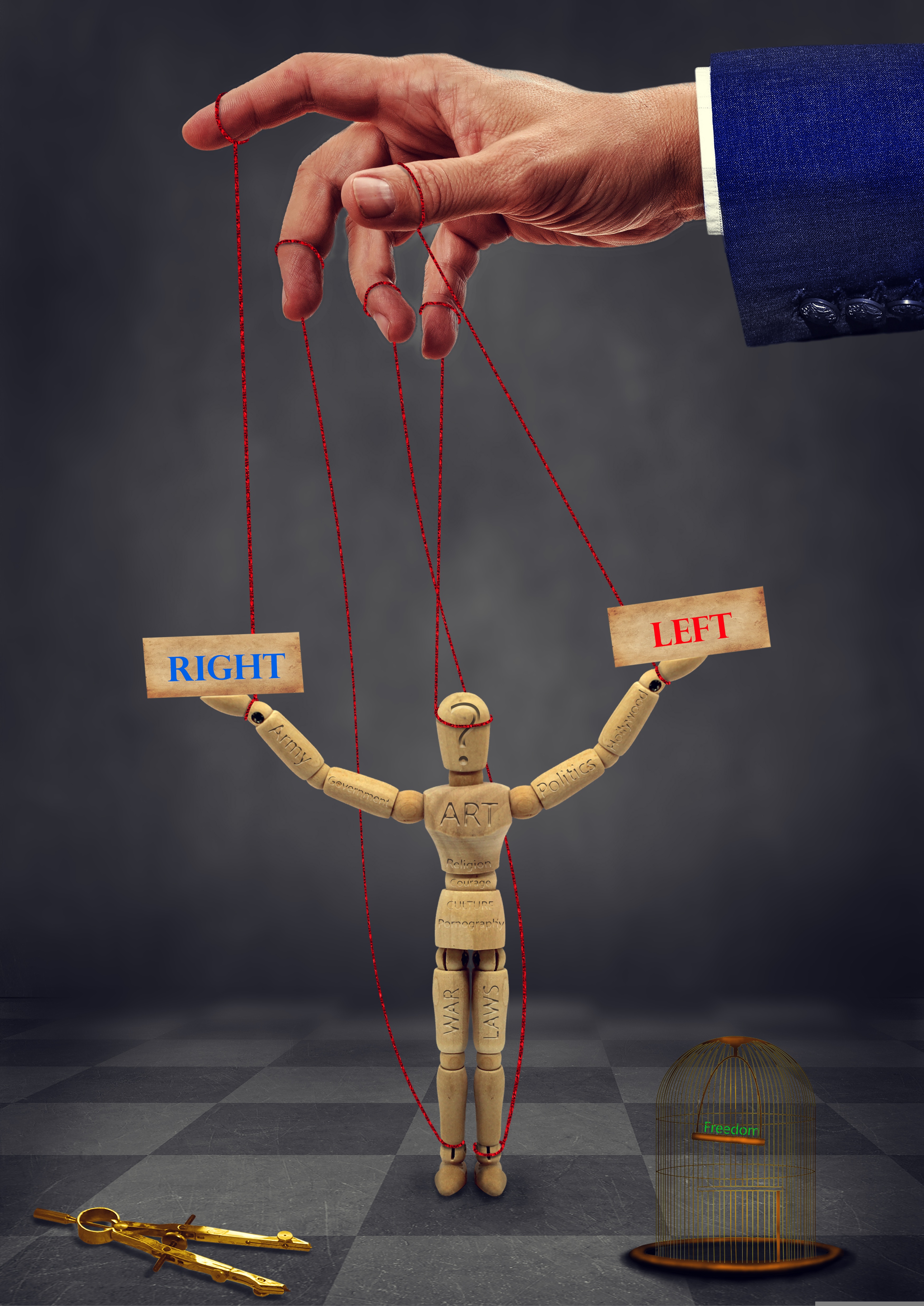
That creates a difficult question: When does government pressure on a private institution become government power?
The answer cannot simply be that any government official who criticizes a private company is censoring it. Government officials are citizens too, and they have a right to speak. Presidents, governors, members of Congress, and other officials routinely criticize newspapers, corporations, universities, broadcasters, and social-media companies. A public official saying, “I disagree with this,” is not the same thing as the government ordering, threatening, or coercing someone to suppress it.
The constitutional problem becomes more serious when government involvement crosses from persuasion into coercion. Courts have had to wrestle with precisely these questions in disputes involving government officials and private platforms. The Supreme Court's 2024 decision in Murthy v. Missouri, for example, addressed allegations that federal officials improperly pressured social-media companies regarding content moderation. The Court ultimately held that the plaintiffs had not established the standing necessary to pursue their claims, and therefore did not resolve the broader question of whether the government's conduct amounted to unconstitutional coercion.
That uncertainty is important because it means we should be careful with the word “censorship.” The existence of government communication with a private company does not, by itself, establish unconstitutional censorship. The actual relationship between the government official and the institution matters, as does the nature of the communication, the authority involved, and what happened afterward.
A Government Can Speak Too
Imagine a president sees a television program and hates it. The president publicly criticizes the program. That is government speech, but it is not necessarily government censorship. Now imagine the president calls the network and says, “You should cancel this program.” That is more significant, but it still does not automatically answer the constitutional question. We would need to know what was said, what authority was invoked, whether threats or coercive pressure were involved, and what happened afterward.
Now imagine the president tells the network that its federal licenses, contracts, investigations, or regulatory treatment will be affected unless the program is canceled. The situation has changed dramatically. The important difference is not simply that the president expressed an opinion; it is that government authority may have been brought to bear on a private institution.
That is why evidence matters. It is easy to say, “The government pressured them.” It is much harder—and much more useful—to establish exactly what happened. Who contacted whom? What was said? Was there a threat? Was there a legal basis for the government's action? Was the private institution actually free to say no? Did the government have regulatory authority over the institution? Was that authority used because of the person's political viewpoint?
Those questions may not produce a satisfying answer for either political side, but they are the questions that allow us to distinguish evidence from assumption.
The Kimmel Question
This becomes especially relevant in the controversy surrounding Jimmy Kimmel and the federal government's relationship with the broadcast industry. The dispute has involved statements from President Donald Trump, ABC and its parent company, the Federal Communications Commission, and other political actors. Trump publicly called for Kimmel to be fired, while FCC Chairman Brendan Carr publicly criticized Kimmel's remarks and discussed regulatory consequences facing broadcasters. The resulting controversy raised competing arguments over whether this represented ordinary political criticism and regulatory oversight or inappropriate government pressure on a private broadcaster.
The useful question for this article is not, “Was Kimmel funny?” It is not even, “Do you agree with what he said?” The useful question is: How much influence should government officials be permitted to exercise over private media organizations because they dislike political speech?
And again, reverse the identities. If a Democratic president publicly demanded that Fox News fire a conservative commentator, would you consider that acceptable? If a Republican president publicly demanded that MSNBC fire a liberal commentator, would your answer change?
The point is not that the two hypothetical situations would necessarily involve identical facts. They might not. The point is that the principle should not depend entirely upon which political team occupies the White House.
Private Decisions Still Matter
There is another side to this. Suppose ABC decides on its own that it no longer wants to broadcast a particular comedian. That is a private corporate decision. You might think it is unfair. You might think it is cowardly. You might think the network made a terrible business decision. You might organize a boycott in response. But unless some additional legal issue is involved, the fact that the decision affects political speech does not automatically transform it into government censorship.
That distinction is easy to lose because private institutions can possess enormous power. A major broadcaster can reach millions of people. A social-media platform can determine whether someone has access to an enormous audience. A corporation can determine whether someone has a job. A university can determine whether someone can participate in a program. A publisher can determine whether a book reaches the market. Those decisions can have profound consequences, but constitutional government and private power remain different categories.
The Harder Problem
The really difficult cases exist in the gray area between them. What if government officials repeatedly contact a private company? What if officials publicly criticize the company's decisions? What if regulators possess enormous authority over that company? What if the company changes its policies after those contacts? What if officials never explicitly threaten the company, but everyone involved understands what could happen if the company refuses?
At some point, “It's private” may no longer adequately describe what is happening. But neither should we automatically assume that government involvement proves unconstitutional coercion. The evidence has to establish the connection.
This is why the modern debate requires something that social media is particularly bad at encouraging: patience. Before deciding that something is censorship, find out who acted. Before deciding that something is merely a private business decision, find out whether government pressure was involved. Before deciding that a government official abused authority, establish what authority they actually possessed. And before demanding that government intervene against someone else's private power, ask whether you would want that precedent available to the other side.
The Power We Give Away
There is a final irony here. Americans sometimes complain that corporations have too much power, then ask the government to use its power against those corporations. Other Americans complain that government has too much power, then ask the government to use that same power against corporations they dislike. Both impulses can be understandable, but they create the same underlying problem: power tends to outlive the people who use it.
The president you trust will eventually leave office. The political party you support will eventually lose an election. The regulatory agency you believe is protecting your values will eventually be led by someone who does not share them. The precedent you create for your allies will eventually become available to your opponents.
That is why the question we began with becomes even more important in the modern era. It is not enough to ask, “Can my side use this power for a good purpose?” We also have to ask, “What happens when the other side gets it?”
Because the modern cancel-culture debate is no longer only about whether people can pressure one another. It is about who has the power to make that pressure stick.
The Private Power Test
If government power deserves special scrutiny because the government can compel, regulate, prosecute, and punish, it would be a mistake to conclude that private power is therefore harmless. Private institutions can exercise enormous influence over people's lives. An employer can decide whether someone has a job. A university can decide whether someone participates in a program. A publisher can decide whether a book reaches readers. A television network can decide whether a show remains on the air. A concert promoter can decide who performs on its stage. A social-media platform can determine whether a person has access to an audience of millions.

None of those institutions is the government. That distinction matters legally, but it does not mean their decisions are insignificant. In fact, one of the defining features of modern cancel-culture disputes is that the person imposing the consequence is often not the government at all. It may be an employer, an audience, a corporation, a university, a professional organization, or a private platform. The First Amendment generally does not require those private institutions to provide a platform simply because someone wants one, although other laws can limit what private institutions are permitted to do in particular circumstances.
So the question becomes more complicated than “Is this censorship?” Sometimes the more accurate question is: Who has the power to decide whether you get to participate?
The Private Consequence
Suppose a comedian makes a political joke you find offensive. You stop watching. Then ten of your friends stop watching. Then a thousand people stop watching. Advertisers decide they no longer want to sponsor the program, and eventually the network cancels the show.
Was that censorship?
Not necessarily. It may simply be the marketplace responding to an audience. You may think the audience was unfair. You may think the advertisers were cowardly. You may think the network made a terrible decision. You may even believe the entire campaign was motivated by political hostility. Those are legitimate subjects for argument, but they are not automatically constitutional violations.
The important distinction is that nobody needed to use the coercive authority of the state to make the decision happen. That does not tell us whether the outcome was good or bad. It tells us that the power being exercised was private.
But Private Does Not Mean Innocent
This is where the conversation becomes uncomfortable for the opposite reason. There is a tendency to hear “private action” and conclude that the action therefore requires no scrutiny. That does not follow.
Private organizations can behave unfairly. Companies can make discriminatory decisions prohibited by law. Employers can violate employment protections. Organizations can abuse their authority. People can use threats or unlawful harassment to pressure someone. Private actors can also coordinate in ways that raise legal questions of their own. The fact that the government is not involved does not magically transform every private action into acceptable conduct. It simply means we need to identify a different source of authority.
The law matters. Contracts matter. Employment rules matter. Anti-discrimination laws matter. Property rights matter. Freedom of association matters. And so does the basic freedom of people and organizations to decide whom they want to associate with. A free society has to accommodate all of these principles at once.
The Macklemore Question
The controversy surrounding Macklemore provides a useful contemporary example because it involves speech, politics, private institutions, and professional consequences without necessarily involving government censorship.
In September 2026, Macklemore was removed from the remaining U.S. dates of Ed Sheeran's stadium tour after the tour promoter said venues had notified it that they would not allow Macklemore to perform. The change followed Macklemore's public pro-Palestinian statements during performances, including statements supporting a “free Palestine.” Reuters reported that an Israeli-American organization had also petitioned for his removal, while Macklemore attributed the decision to pressure from venue owners and others. The competing accounts matter because they demonstrate why identifying the actual mechanism is so important.
Was Macklemore's speech protected by the First Amendment? As a general matter, political expression receives strong constitutional protection against government restriction. Did that mean a private concert venue was constitutionally required to host him? That is a different question.
A private venue can have its own policies and business interests, subject to applicable law and contractual obligations. A promoter can make decisions about its lineup. Audiences can decide whether they want to attend. At the same time, someone can reasonably argue that excluding an artist because of political speech is a troubling exercise of private power even if it is not government censorship.
Those are different claims. And that distinction is exactly what this article is asking us to learn how to make.
The Mirror Works Both Ways
Imagine Macklemore had expressed the opposite political position. Imagine he had made strongly pro-Israel statements instead of pro-Palestinian ones. Suppose some venues objected and demanded that he be removed. Would you defend his right to speak? Would you defend the venues' right to decide whom they wanted to host? Could you defend both principles simultaneously?
You might. In fact, that may be the most intellectually consistent position available: defend the individual's freedom from government censorship while recognizing the private institution's authority to make its own decisions, while still reserving the right to criticize that private decision.
The Constitution does not require you to approve of a private institution's choice simply because the choice is lawful. Legal does not automatically mean admirable, and disagreeable does not automatically mean unconstitutional.
The Platform Problem
Social-media companies make this distinction even harder. A traditional newspaper has a relatively small number of editorial decision-makers. A television network has executives, producers, and standards departments. A social-media platform may have enormous numbers of users, automated moderation systems, human moderators, algorithms, advertisers, and constantly changing policies.
When a platform removes someone's account, the practical consequences can be enormous. For a prominent person, losing an account may mean losing access to a massive audience. For an ordinary person, it may mean losing a community, a business channel, or years of accumulated work. That makes private moderation an important exercise of power even when the First Amendment does not treat the platform as the government.
And this is where the modern debate becomes particularly complicated: private companies sometimes make moderation decisions while simultaneously interacting with government officials. That brings us back to the question from the previous section: Where does private power end and government coercion begin?
The Supreme Court's Warning
The Supreme Court confronted part of this problem in Murthy v. Missouri, a 2024 case involving allegations that federal officials had pressured social-media companies to suppress certain content. The Court did not decide that government coercion had occurred. Instead, it held that the plaintiffs had failed to establish the standing necessary to obtain the requested injunction and emphasized the difficulty of connecting particular government communications to particular platform decisions. The Court also noted that the platforms had independent incentives and policies governing content moderation.
That decision is useful precisely because it does not give us a simple political slogan.
It tells us that the existence of communication between government officials and private companies does not, by itself, establish unconstitutional government censorship.
But it also leaves room for the underlying constitutional principle: if government officials actually coerce private actors into suppressing protected speech, the fact that a private company technically carried out the action does not necessarily end the constitutional inquiry. The Court's opinion discusses that distinction directly.
The line therefore has to be examined case by case.
Who acted? What did they say? What authority did they possess? What did the private institution do? Why did it do it? And was the private decision genuinely independent? Those questions may be tedious compared with simply declaring “censorship” or “accountability.” But democracy requires the tedious questions.
What Do We Actually Believe?
This brings us back to the reader. Suppose a private company removes someone you despise. Are you comfortable saying the company has the right to make that decision? Now suppose the company removes someone you admire. Do you still believe in that right?
Suppose a private employer fires someone whose political opinions you find repugnant. Would you call that accountability? Now reverse the politics. Would you still use the same word?
The private-power test is therefore not simply about protecting corporations.
It is about determining whether we believe people and institutions should have freedom to make choices even when we strongly dislike the choices they make.
That freedom can produce outcomes we hate. Sometimes that is the price of living in a society where government does not control every private association. But it also means we have another responsibility.
If we believe a private institution has acted unfairly, we can criticize it. We can boycott it. We can organize against it. We can persuade other people to change their behavior.
In other words, we can use the same tools Americans have been using throughout this entire story. The question is whether we can recognize those tools when our side is holding them. And that brings us to the simplest form of private power of all:
your wallet.
The Consumer Test
There is another form of private power that is easy to overlook because it feels so ordinary: the power of the consumer. Every purchase is a choice, and choices can communicate more than economic preference. You can refuse to buy a product because you dislike the company's politics, labor practices, environmental record, advertising, religious affiliations, political donations, or position on a public issue. You can also deliberately support a company for precisely the same reasons.
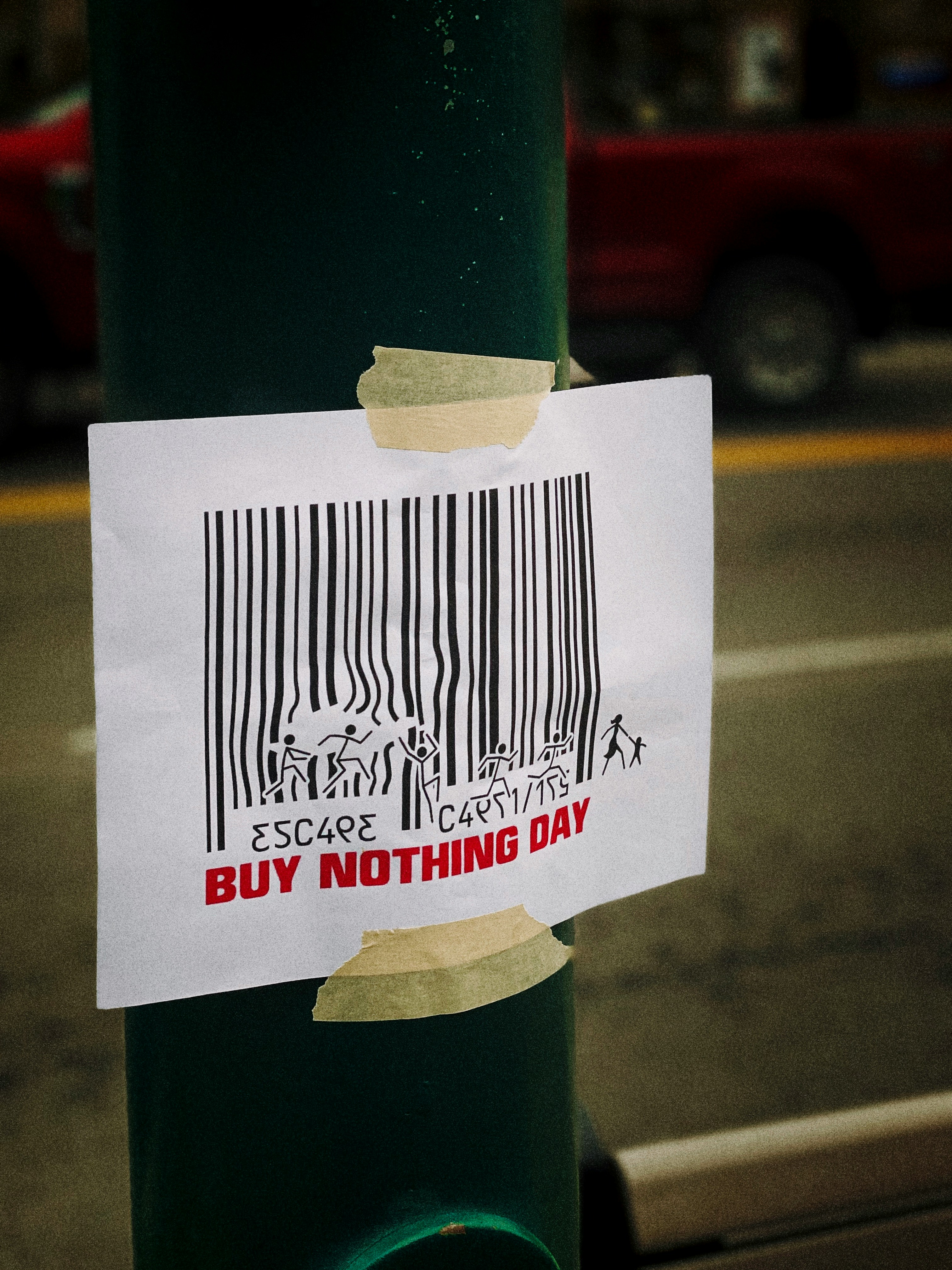
That means economic behavior can become political behavior. When enough people make the same choice, individual consumer decisions can become collective economic pressure. That is not a new phenomenon. The abolitionists used boycotts and free-produce movements. Civil Rights activists used consumer boycotts to challenge segregation. Modern Americans have continued the same tradition, sometimes over issues as varied as abortion, gun policy, LGBTQ rights, immigration, labor practices, Israel and Palestine, and corporate political activity.
This is another place where the phrase “cancel culture” can become too broad to be useful. If someone says, “I don't like this company, so I am not buying its product,” calling that censorship tells us very little. If millions of people organize a lawful boycott, that is still fundamentally an exercise of consumer and associational power. If someone threatens an employee because of the controversy, we are dealing with something else entirely.
The mechanism matters.
The Principle Has to Work Both Ways
There is another reason the consumer test matters. Most people have participated in some form of political consumption, whether they have avoided a company because of its environmental practices, labor practices, political donations, treatment of employees, advertising, religious affiliations, positions on abortion or gun policy, LGBTQ rights, immigration, Israel and Palestine, or some other issue. Perhaps you have deliberately supported a company for precisely the same reasons.
If you have done that, you have already accepted the basic principle that economic choices can communicate political values. The Consistency Test asks what happens when someone else does it. If you believe conservatives have the right to boycott a company because they object to its politics, are you willing to defend liberals when they boycott a company for the opposite reason? If you believe progressive activists are entitled to organize a consumer campaign against a company they believe is behaving irresponsibly, do you accept the same principle when conservatives organize against a company they believe is promoting values they reject?
The answer does not have to be that every boycott is wise, effective, fair, or morally persuasive. It means only that the basic freedom to make the choice should not depend on which political identity is making it.
When Principles Cost Something
There is another question hiding underneath all of this, and it connects directly to the economic history we examined in Part I: How much are your principles worth?
It is easy to say that you support a cause when supporting it costs nothing. It is harder when the product you are boycotting is inexpensive, convenient, familiar, and something you actually enjoy. The abolitionists faced versions of this problem when they promoted free-produce movements intended to encourage consumers to avoid goods produced by enslaved labor. Civil Rights activists faced it when boycotts required people to find alternative transportation or change their shopping habits. Workers and consumers have repeatedly had to decide whether a political or moral principle was worth the inconvenience associated with acting on it.
The modern consumer faces the same basic choice, even if the stakes are usually smaller. Would you pay more for the product that aligns with your values? Would you drive farther? Would you give up something you enjoy? Would you accept inconvenience to make a political point? Or do you support the principle until it becomes inconvenient? That is not a question about left or right. It is a question about whether our convictions actually influence our behavior.
And Then There Is the Other Person
The most important part of a boycott may not be what you do with your own money. It may be how you respond to someone who makes a different choice.
You are free to stop buying the product. Your neighbor is free to keep buying it. You can explain why you think your neighbor is wrong, and your neighbor can explain why they think you are wrong. You can attempt to persuade one another, and you can even organize other people to join your boycott.
But at some point, the question changes from “What will I do?” to “What will I make you do?”
That is the line this article keeps returning to. A free society gives individuals considerable power over their own choices and opportunities to combine those choices into collective action, but the existence of that power does not automatically give us authority over everyone else. Once again, we are forced to distinguish between pressure and coercion, private power and government power, criticism and threats, persuasion and control.
The consumer test therefore leaves us with a deceptively simple question: Are you trying to change someone's behavior—or are you trying to deny them the freedom to choose for themselves?
Sometimes those things overlap. The important task is not to pretend they never do, but to identify where the line is and why it matters. And the difference becomes much harder to ignore when the person on the other side of the controversy is not a corporation, but a human being.
Paul Pelosi
At some point, the discussion about pressure and consequences stops being theoretical. Political disagreement can become personal, and political rhetoric can become connected to real-world violence. The October 2022 attack on Paul Pelosi is an important case because it forces us to separate several things that are often collapsed into one argument: political disagreement, inflammatory rhetoric, conspiracy theories, political violence, and the reactions that follow an act of violence.
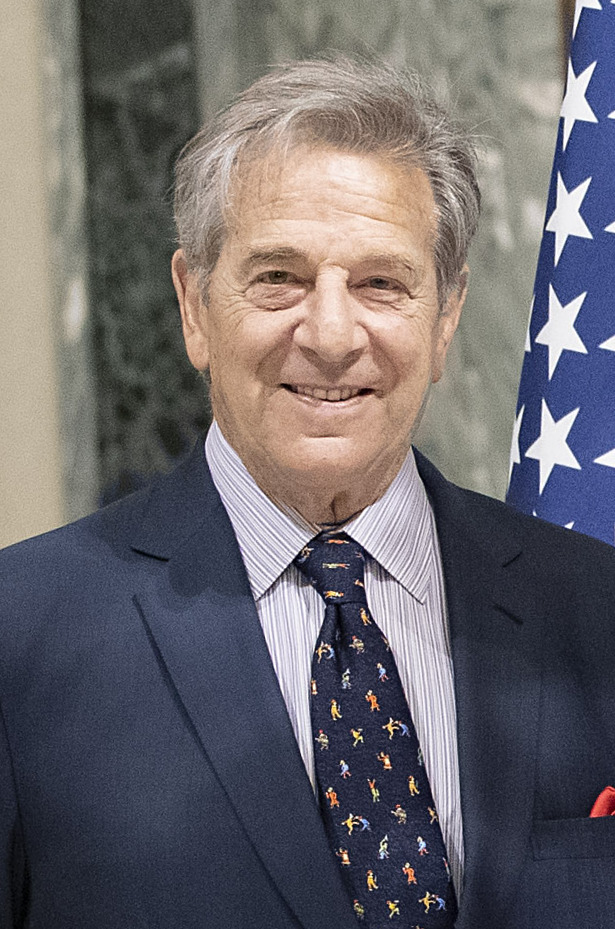
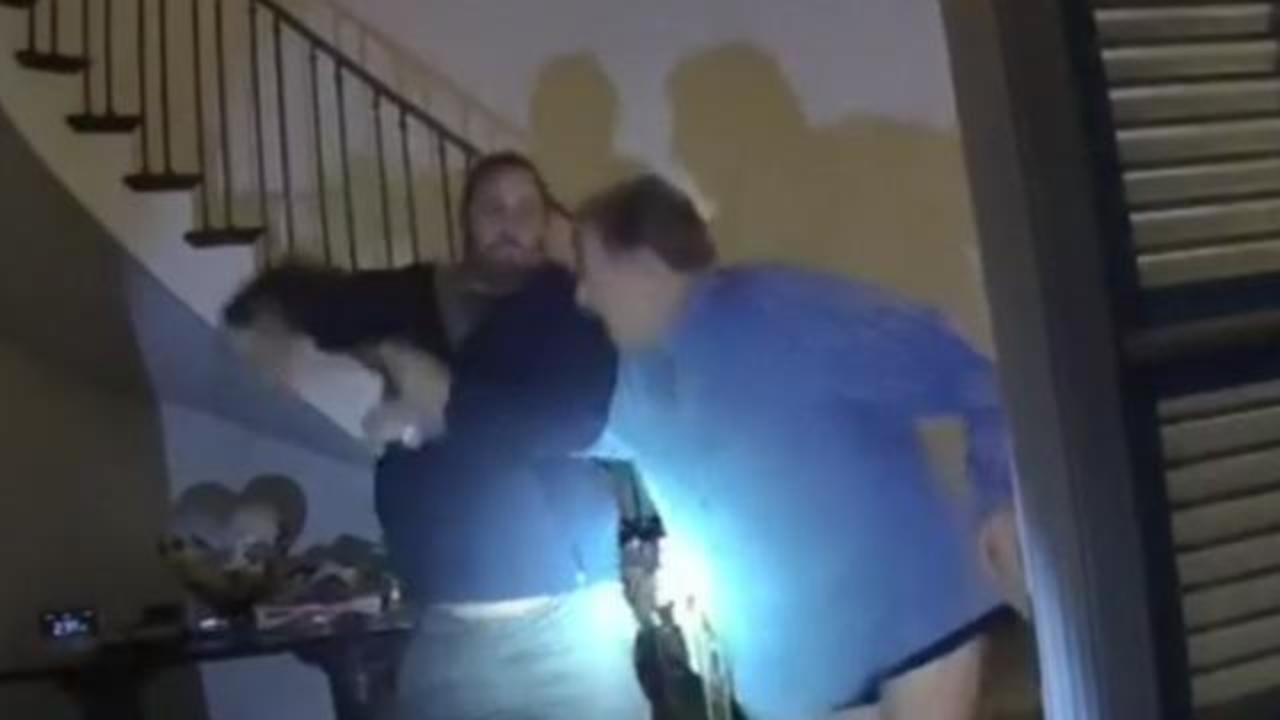
In the early morning of October 28, 2022, an intruder broke into the San Francisco home of then-House Speaker Nancy Pelosi while she was in Washington. The attacker, David DePape, confronted her husband, Paul Pelosi, and repeatedly asked, “Where is Nancy?” before striking him with a hammer. Pelosi suffered a skull fracture and serious injuries to his arm and hands. DePape was subsequently convicted in federal court and received a 30-year sentence; he was later convicted on state charges and sentenced to life imprisonment without parole.
The attack was not simply a random encounter that happened to involve a politician's family. Prosecutors presented evidence that DePape had intended to locate Nancy Pelosi and hold her hostage, and his own statements and writings reflected a collection of conspiracy theories and political grievances. During his federal trial, prosecutors argued that his actions were politically motivated, and the evidence presented in court included his stated intention to confront Nancy Pelosi over what he believed were political lies.
That does not mean every person who repeated a conspiracy theory, criticized Nancy Pelosi, opposed the Democratic Party, or expressed anger about American politics bears responsibility for DePape's actions. It would be unreasonable to collapse an enormous political ecosystem into the behavior of one individual. But it does mean that the attack belongs in a discussion about what can happen when political narratives, conspiracy theories, personal grievance, and violence intersect.
The Reaction Was Part of the Story
The attack itself was horrifying, but the response to it quickly became another political controversy. Political leaders from both parties condemned the assault, including President Joe Biden and Republican leaders such as Senate Minority Leader Mitch McConnell. At the same time, some political figures and commentators responded in ways that kept partisan politics at the center of the story, demonstrating how difficult it can become for political actors to step outside the normal cycle of partisan conflict even when violence is involved.
Online, the situation became even more complicated. False claims and conspiracy theories about what had happened spread rapidly, even after law enforcement had released evidence concerning the attack. The controversy demonstrated something that has become increasingly familiar in the internet age: an event can happen in the physical world, but the battle over what the event means can begin almost immediately online.
That distinction matters because there are really two separate questions: What happened, and what story are we going to tell about what happened? The first question is answered through evidence. The second is where politics, ideology, emotion, identity, and tribal loyalty can take over.
The Temptation to Pick a Side
Imagine that someone you strongly dislike is attacked. Your first instinct might be to think about everything you dislike about that person. You may remember their political statements, their votes, their policies, their personality, or the things they have said about people you admire. You may believe they have contributed to a political climate that you consider dangerous.
None of that changes the basic fact that they have been attacked. The reverse is equally true. Imagine that someone you admire is attacked by a person whose politics are radically opposed to yours. You may immediately conclude that the attack proves something terrible about the other side, or you may be tempted to hold an entire political movement responsible for the actions of one person.
A democracy cannot function if every act of violence becomes an opportunity to assign collective guilt to millions of people who had nothing to do with it. At the same time, a democracy should not pretend that political rhetoric and political movements exist in a vacuum. The challenge is to establish the connection carefully rather than assume it.
The Pelosi Test
This is where the Consistency Test becomes more than a rhetorical exercise. Suppose Paul Pelosi were not politically connected to Nancy Pelosi. Suppose instead that he were the spouse of a Republican congressional leader and a politically motivated attacker broke into his home looking for his wife.
Would you condemn the attack? Most people would probably say yes. But what about the reactions afterward? Would you object if people mocked the victim? Would you object if commentators circulated conspiracy theories about the attack? Would you object if political opponents treated the violence as an opportunity to score partisan points?
Would you still object if the victim's political identity were reversed?
The test is not asking you to abandon your political beliefs. It is asking whether you believe political violence should be treated differently depending upon the political identity of the person who experiences it. That is a much harder question.
Words, Responsibility, and the Line
There is also a legitimate argument about rhetoric. Political language matters. Conspiracy theories matter. Dehumanizing language matters. Repeated claims that political opponents are enemies, traitors, criminals, or existential threats can contribute to a political environment in which people become less willing to regard those opponents as legitimate participants in the same democratic system.
But causation matters too. It is not enough to find a violent person's political statements and then work backward to declare that every person who used similar language caused the violence. That would turn political responsibility into guilt by association. The proper question is more specific: What did the person actually say? What did they intend? What connection can be established? What evidence exists that their words encouraged or facilitated unlawful conduct?
That standard protects people on every side. It protects ordinary political speech from being blamed for every violent act committed by someone who happens to share an ideology, while leaving room for serious scrutiny when someone actually threatens, encourages, coordinates, or facilitates violence.
From Political Disagreement to Political Violence
Paul Pelosi's attack therefore represents something different from the boycotts and public pressure we examined in the previous sections. A boycott attempts to impose an economic consequence. A protest attempts to create political pressure. Public criticism attempts to change opinion. Violence bypasses persuasion entirely and substitutes physical force for political argument.
That is why political violence represents such a fundamental threat to democratic disagreement. If Americans believe they can change the country by persuading one another, organizing, voting, protesting, boycotting, litigating, or changing laws, then disagreement remains part of the political system. If they begin to believe that political opponents should be physically attacked because persuasion has failed, the rules have changed.
The question is no longer, “How do we convince them?” It becomes, “How do we make them afraid?” And that is a very different kind of power.
The Mirror Is Coming
Paul Pelosi's attack is not the end of this discussion. It is where the article's mirror becomes more difficult, because the next case forces us to examine a person whose political identity is very different from Paul Pelosi's—and whose supporters and critics have spent years arguing about the boundaries of speech, accountability, political violence, and public consequences.
The question will not be whether you agree with him. It will be whether the principles you just applied to Paul Pelosi still exist when the political identities are reversed. That is where the Consistency Test is supposed to take us.
Charlie Kirk
The Charlie Kirk case brings us to perhaps the most difficult test in this entire article because it forces us to separate several questions that are easy to collapse into one. On September 10, 2025, Kirk, a prominent conservative political activist and founder of Turning Point USA, was fatally shot while speaking at Utah Valley University. Political leaders across the ideological spectrum condemned the killing.

Kirk was a deeply polarizing political figure. His supporters regarded him as an important conservative organizer and advocate; his critics strongly objected to many of his political positions and statements. None of that changes what happened to him. A political disagreement does not become less violent because the victim is controversial, and the fact that someone has said things you strongly oppose does not make their killing a legitimate form of political argument.
That should be an easy principle to defend.
The harder question came afterward.
What Happened After Kirk's Death
Within days of the shooting, employers began disciplining or terminating people over social-media comments about Kirk's death. Reuters initially identified at least 15 people who had been fired or suspended, including employees in journalism, education, and other fields. The number grew substantially as additional cases emerged. A later Reuters investigation found that more than 600 Americans had been fired, investigated, suspended, or otherwise disciplined over comments concerning Kirk's assassination, with responses ranging from consequences for celebrating or appearing to condone his death to discipline over comments criticizing Kirk's politics. Some people were also wrongly targeted, and at least some individuals placed on leave were later reinstated.
There is an important distinction here that should not be lost. Some people were disciplined for statements that appeared to celebrate or condone political violence. Others were punished for statements that were offensive, unsympathetic, or sharply critical of Kirk but did not necessarily advocate violence. Those are not identical categories, and an employer's decision to discipline someone does not automatically establish whether that decision was legally required, legally permissible, or wise.
That is precisely why the Kirk case is so useful.
Accountability or Cancel Culture?
Suppose an employee posts, “Political violence is never acceptable.” That is one kind of statement. Suppose the employee posts, “I disagree with Kirk, but his assassination was wrong.” That is another. Suppose the employee posts, “I am glad he is dead.” That is different again. And suppose someone explicitly encourages political violence against another person. That is different still.
If we put all four statements into one category called “Kirk comments,” we have stopped thinking carefully.
The same problem appears when people use the words “accountability” and “cancel culture” as though they automatically settle the question. One person may look at an employee's termination and say, “There should be consequences for celebrating an assassination.” Another may look at the same termination and say, “This person lost their livelihood because of political speech.” Neither label tells us what actually happened.
We need to know what was said, what the employer's policies were, whether the person was a public or private employee, whether any contractual or statutory protections applied, whether the speech was connected to the workplace, and whether the employer was responding to violence or simply to political disagreement. The facts matter more than the label.
Now Turn the Clock Back
This is where Charlie Kirk's own history becomes relevant to the Consistency Test. The 2022 attack on Paul Pelosi occurred years before Kirk's own assassination. During his October 31, 2022 broadcast, Kirk described the attack as “awful” and “not right,” but he also questioned why David DePape remained jailed and called for an “amazing patriot” to bail him out and then question him. FactCheck.org reviewed the original broadcast and confirmed the remarks and their context.
That history should not be misrepresented. Kirk did not say that attacking Paul Pelosi was good. He explicitly said the attack was awful and not right. His argument was instead about pretrial detention, bail, and what he viewed as inconsistent treatment under the criminal-justice system. At the same time, his remarks came amid a broader online environment in which false and conspiratorial claims about the Pelosi attack were circulating, making his comments part of a larger political controversy over how the attack was being discussed.
Why include this in a discussion of Kirk's assassination? Because consistency requires us to ask what standards we apply before and after political violence.
If you believed people should face professional consequences for making light of Paul Pelosi's attack, do you believe the same principle should apply when people make light of Kirk's assassination? If you believe people should be permitted to criticize the victim of political violence without losing their jobs, does that principle apply when the victim is Charlie Kirk? If you believe celebrating political violence is beyond the acceptable boundaries of political speech, does that standard apply regardless of whether the victim is a progressive, a conservative, a Republican, a Democrat, or someone you personally despise?
The answers may not be identical in every case because the facts may differ. But the principle should not change merely because the political identity of the victim changes.
The Difference Between Criticism and Celebration
There is another distinction worth making because it is easy to lose in the emotional aftermath of violence. Someone can criticize Charlie Kirk after his death. Someone can condemn his political ideas. Someone can point out statements he made during his life that they found offensive or harmful. Someone can argue that his political legacy was damaging. None of those statements necessarily celebrates his killing.
Likewise, someone can condemn political violence against Kirk while continuing to oppose virtually everything he believed. That is an important part of democratic citizenship. We do not have to admire our political opponents to recognize their humanity, nor do we have to approve of their ideas to believe that they should be permitted to participate in democratic life.
The line becomes more serious when criticism turns into celebration of violence, threats, or encouragement of future violence. That line should matter whether the speaker is attacking someone on the political left or someone on the political right.
The Private-Power Problem Returns
The Kirk aftermath also takes us directly back to the previous sections about private power. Many of the employers who disciplined workers were private organizations. A private employer generally has substantially more latitude over employee conduct than the government has over citizens' political speech, although employment law varies by jurisdiction and circumstance and public employees can have additional protections.
That means an employer firing an employee is not automatically the equivalent of government censorship. But that does not end the discussion.
Private employers can exercise tremendous power over someone's life. Losing a job can affect income, reputation, professional opportunities, and family stability. If hundreds of employers respond to political controversy by disciplining employees for expressing unpopular opinions, the cumulative effect can influence what people feel safe saying even outside the workplace.
That is a real social consequence even when the First Amendment is not directly implicated. And this is where the term “cancel culture” becomes useful again—not as a precise legal category, but as a description of a social phenomenon involving public pressure, professional consequences, reputational punishment, and efforts to make other people withdraw their support.
The Mirror
Now imagine that the political identities are reversed. Imagine a prominent liberal activist is assassinated. Imagine people on the right celebrate the killing. Imagine employers begin firing employees who post those celebrations. Would you support those firings?
Now imagine the reverse. A prominent conservative activist is assassinated. People on the left celebrate the killing. Employers begin firing them. Would you support those firings?
If your answer changes solely because you prefer one victim to the other, then the principle you are defending is not really about political violence.
It is about tribal loyalty. That does not mean every employee must be treated identically regardless of circumstances. An employee who threatens a coworker is not in the same position as one who makes an offensive joke. A public employee may face different constitutional rules than a private employee. A person who encourages violence is not necessarily situated the same way as a person who expresses an unpopular political opinion.
The Consistency Test is not an argument against distinctions. It is an argument against distinctions that exist only because we like one side more than the other.
When the Government Enters the Story
The Kirk controversy becomes even more complicated because some political officials called for broader consequences against people who celebrated or mocked his death. That introduces government power into what had initially been a largely private dispute between individuals and their employers.
This is where the Nixon Test returns.
If a private company decides an employee's comments violate its policies, that is one thing. If government officials encourage private employers to punish political opponents, compile lists of critics, threaten regulatory consequences, or use government authority to pressure institutions into taking action, that raises a different set of constitutional questions.
Those questions should be examined with the same standard regardless of who is in power. The temptation in politics is to think that government pressure is acceptable when it is directed at people we consider dangerous and unacceptable when it is directed at people we consider legitimate.
That is precisely backwards as a constitutional principle. The government does not become less powerful because we dislike the people it is targeting. Why This Case Matters
Charlie Kirk's death therefore belongs in this article for a reason larger than Charlie Kirk. It demonstrates how quickly a single act of political violence can produce a chain reaction: grief, anger, celebration, condemnation, social-media campaigns, employer investigations, firings, political demands, government involvement, and arguments over the boundaries of acceptable speech.
The original act was violence. The aftermath became a struggle over speech and power.
And suddenly the question was no longer simply whether political violence was acceptable. Americans were arguing about whether people should lose their jobs for how they responded to political violence, whether employers should punish political speech, whether government officials should encourage those punishments, and whether the standards being applied would survive if the political identities were reversed.
That is exactly the kind of situation for which the Consistency Test exists. The question is not whether Charlie Kirk was someone you admired. It is not whether you agreed with him. It is not even whether you thought his political ideas were good or bad.
The question is much harder:
If you believe political opponents should be protected from political violence, protected from government retaliation, and permitted to participate in democratic life, do you still believe it when the person standing on the other side of the line is someone you cannot stand?
Because eventually, every political movement has to answer that question about somebody. And the next case gives us the mirror image.
Ruth Bader Ginsburg
If Charlie Kirk forces us to ask whether we can defend someone we strongly disagree with, Ruth Bader Ginsburg gives us the mirror image. Ginsburg was one of the most recognizable liberal figures in American public life, a Supreme Court justice whose career was closely associated with women's rights, gender equality, and other progressive legal causes. She was appointed to the Supreme Court by President Bill Clinton in 1993 and served for more than 27 years before her death on September 18, 2020.
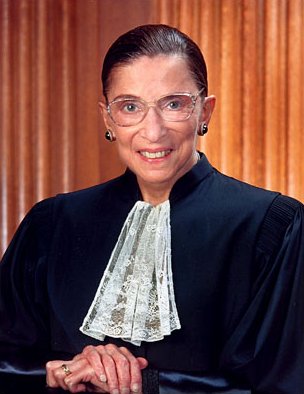
Her death immediately became part of an enormous political struggle because a Supreme Court vacancy is never merely an empty chair. It creates an opportunity for a president to nominate a successor and for the Senate to decide whether that nominee will take a seat on the Court. In Ginsburg's case, the timing made the political consequences particularly significant: her death came only weeks before the 2020 presidential election, and President Donald Trump moved to nominate Amy Coney Barrett. Liberal advocacy organizations and Democratic politicians argued that the nomination should be delayed until after the election, while conservative organizations and Republican politicians argued that the president had the authority to make the nomination and that the Senate should consider it. Barrett was ultimately confirmed by the Senate on October 26, 2020, by a vote of 52–48.
There is nothing inherently wrong with recognizing the political consequences of someone's death. That distinction matters because this section is not about pretending that political consequences disappear when someone dies. They do not. A Supreme Court justice's death creates a vacancy, and the political system has to decide what happens next. Americans are entitled to debate that question vigorously, and political organizations are entitled to advocate for the outcome they prefer. The harder question is what happens when political disagreement about the consequences of someone's death turns into celebration of the death itself.
The Difference Between Consequence and Celebration
When Ginsburg died, some Americans mourned her deeply. Others viewed her judicial philosophy as harmful and looked forward to the possibility of replacing her with a justice whose views were closer to their own. Public reactions also included expressions of celebration or mockery, illustrating how quickly the death of a political figure can become another battlefield in an already polarized political environment.
Those reactions should not all be placed in one category. There is a meaningful difference between saying, Her death means the Supreme Court may move in a different ideological direction, and saying, I am glad she is dead. There is another difference between criticizing Ginsburg's judicial record and expressing contempt for her as a human being. Someone can believe that Ginsburg's jurisprudence was wrong, oppose the causes she championed, and favor replacing her on the Court without celebrating the fact that she died.
Those distinctions matter because otherwise political disagreement becomes almost impossible to discuss honestly. A person can oppose a political figure without hating them. A person can celebrate a political victory without celebrating someone's suffering. And a person can mourn a political opponent's death without suddenly agreeing with anything that person believed.
That last point is especially important. Mourning is not endorsement, just as political disagreement is not hatred. Democracy requires us to distinguish between the person and the political position, even when the person has become so closely associated with that position that the distinction becomes difficult to see.
Now Reverse the Identities
This is where the Consistency Test becomes uncomfortable.
Imagine a conservative Supreme Court justice dies. Imagine that justice has spent decades advancing legal positions you strongly oppose, and progressives immediately begin discussing how the vacancy could change the Court. Would you consider that discussion inappropriate?
Probably not. Political consequences are political consequences, regardless of which side benefits from them.
Now imagine that some people go further and celebrate the justice's death. Would you object? If your answer is yes, ask yourself whether you would object if the justice were someone you strongly disliked. Then reverse the political identities again.
If you would defend the humanity of a conservative justice when progressives celebrate their death, but excuse the celebration of Ginsburg's death because she was a liberal icon, then the principle is not really about how we should respond to death. It is about whose death we think deserves respect.
That is exactly the kind of distinction this article is asking us to examine.
You Don't Have to Mourn Someone
There is an important qualification here: a democratic society cannot require people to feel grief. You may not have liked Ginsburg. You may not have admired her legal philosophy. You may have believed that the Supreme Court would be better without her, or opposed virtually everything she represented politically. You do not have to pretend otherwise because she died.
Respecting someone's humanity does not require pretending to share their beliefs. If a political opponent dies, you do not have to rewrite history and declare that you always admired them. You do not have to praise their record, support their policies, or suddenly describe their political legacy in terms you never believed while they were alive. You can continue to believe that they were wrong.
But there is a difference between saying, I strongly opposed what this person stood for, and saying, Their death is something I celebrate. That difference becomes particularly important in a democracy because political opponents are not supposed to become legitimate targets simply because they are on the other side.
The point is not that everyone must respond to death in exactly the same emotional way. People grieve differently, and some people feel little or no grief for a political figure they opposed. The point is that our basic standards should not change simply because the political identity of the deceased changes.
The Human Being Behind the Political Symbol
Ginsburg had become more than a Supreme Court justice by the end of her life. She had become a cultural symbol, particularly among younger Americans who embraced the nickname "Notorious RBG" and treated her as an icon of liberal politics and women's rights. That cultural status created its own problem: once a human being becomes a political symbol, it becomes easier to forget that there is a human being underneath the symbol.
The same thing happened in a different way with Charlie Kirk. People who admired Kirk saw more than a political activist. They saw a husband, father, friend, organizer, speaker, and a person whose life had meaning to them. People who opposed him often saw primarily the political figure they disliked.
Ginsburg's admirers saw the woman who had spent decades fighting for causes they believed in. Her opponents could see primarily the justice whose decisions they opposed. In both cases, the political symbol can obscure the person. And when that happens, the emotional distance between disagreement and dehumanization becomes shorter.
This does not mean political figures should be protected from criticism because they are human beings. They should not. Public officials and public figures can be criticized, challenged, mocked, opposed, and held accountable for their actions and ideas. The question is whether we can do those things without allowing the political symbol to erase the human being entirely.
Politics Does Not End When Someone Dies
There is another lesson in Ginsburg's death that connects directly to the broader argument. Americans often say that politics should stop at the moment of tragedy. Sometimes that is appropriate. There are moments when the first responsibility should simply be to recognize someone's humanity and allow their family to grieve.
But political systems do not stop functioning because someone dies. Ginsburg's death created a Supreme Court vacancy, and that vacancy had enormous constitutional and political consequences. Americans had every right to debate what should happen next, and political organizations had every right to advocate for their preferred outcome. The existence of that political debate was not itself an insult to Ginsburg or to those who mourned her.
The problem is not political disagreement after a death. The problem is when political disagreement becomes an excuse to abandon the basic standards we would want applied when the identities are reversed.
That distinction is important throughout this article. We are not trying to eliminate conflict. We are trying to determine whether the rules we claim to believe in survive contact with people we dislike.
The Ginsburg Test
This gives us another version of the Consistency Test:
If you believe political opponents should not celebrate the death of someone you admire, would you defend that principle when the person who died is someone you despise?
If you believe it is legitimate to celebrate the political consequences of a death, would you accept that principle when the consequences benefit the other party?
If you believe criticism of a public figure should remain permissible after their death, would you defend the same freedom for someone whose political beliefs you find offensive?
And if you believe celebrating a political opponent's death crosses a moral line, does that line still exist when your opponent is the person who has died?
These questions do not require us to agree about Ginsburg. They require us to decide whether political identity determines the basic rules we apply to human beings.
The Bigger Pattern
Paul Pelosi showed us what happens when political disagreement intersects with physical violence. Charlie Kirk showed us what happens when political violence is followed by a battle over speech, employment, and public consequences. Ginsburg shows us something quieter but no less revealing: the temptation to treat the death of a political opponent as a political victory rather than a human event.
These cases are not identical, and they should not be treated as though they are. One involved a violent home invasion, another an assassination, and another a death from natural causes followed by a major constitutional and political dispute. Their circumstances and consequences are fundamentally different.
What connects them is the question they force us to ask about ourselves. Does our standard change when the political identity changes? If it does, perhaps we are not defending a principle. Perhaps we are defending our team.
And that brings us to an even larger question: what happens when the “team” itself becomes more important than the political system both teams are supposed to share?
Black Lives Matter
If the Charlie Kirk and Ruth Bader Ginsburg sections ask us to examine how we treat individual political opponents, Black Lives Matter forces us to examine how we treat entire political movements. The protests that followed the killing of George Floyd in May 2020 were not a single demonstration with a single message, but a nationwide and international wave of protests, marches, vigils, memorials, and political organizing. Within days, demonstrations were taking place in hundreds of American cities, with participants demanding changes in policing and criminal justice and drawing attention to longstanding concerns about racial inequality and police violence.
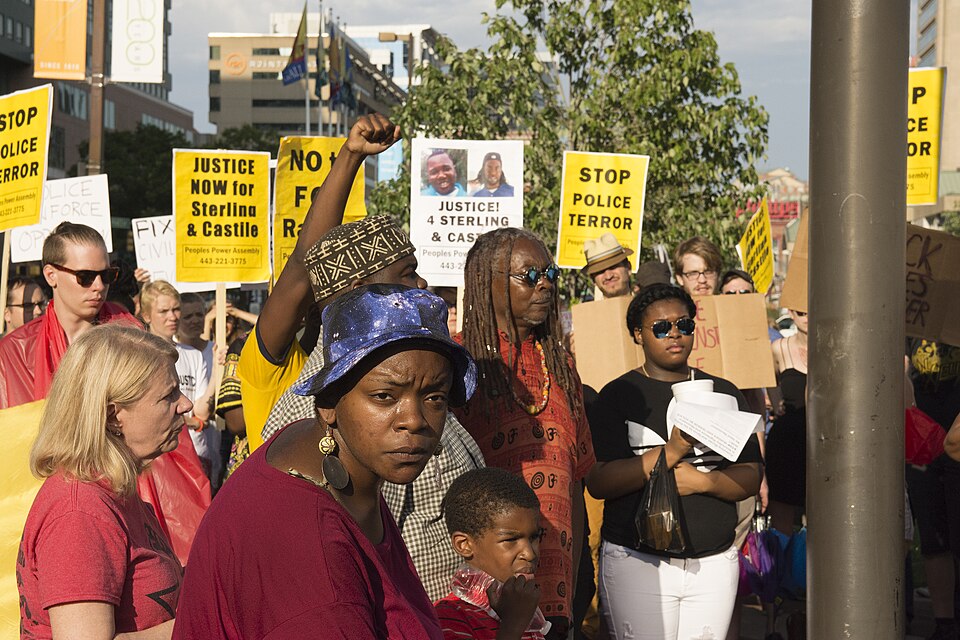
The scale was extraordinary, but the underlying mechanism was familiar. People saw something they believed was profoundly wrong, gathered together, demanded that other Americans pay attention, and attempted to turn public attention into political change. Demonstrators used marches, signs, speeches, social media, boycotts, memorials, civil disobedience, and other forms of collective action. The movement also generated enormous media coverage, which meant that Americans who never attended a demonstration nevertheless became participants in the national argument simply by watching, sharing, commenting, supporting, or opposing what they saw.
The first thing we should resist is the temptation to reduce all of that activity to a single word. Protest does not mean riot. Riot does not mean every protester. Black Lives Matter does not mean every person who attended a demonstration shared exactly the same political beliefs, and criticism of Black Lives Matter does not automatically mean opposition to the proposition that Black lives have equal value.
These distinctions may sound obvious, but the inability or unwillingness to make them became one of the defining features of the political argument surrounding the protests. Once an enormous and decentralized political movement is reduced to its most dramatic images, the people who actually participated become difficult to distinguish from the events that received the most attention.
A Movement Is Not a Crowd
The summer of 2020 contained enormous numbers of peaceful demonstrations. Archives and contemporary records preserve photographs, posters, memorials, and accounts of students, activists, university organizations, and residents gathering to mourn, demonstrate, organize, and demand change. Those records are useful precisely because they preserve something that can disappear when the historical record becomes dominated by the most dramatic images: the ordinary act of people gathering peacefully to participate in political life.
At the same time, violence and property destruction occurred in some places during the broader period of unrest. That fact should not be erased simply because it complicates the story of peaceful protest. Nor should the existence of violence be used to describe every person who participated in demonstrations as violent.
Both things can be true at once. A movement can contain overwhelmingly peaceful participants while violence occurs during some events associated with that movement. A protest can begin peacefully and later become disorderly. Individuals can exploit a political demonstration for unrelated criminal activity, and counter-protesters can become involved. Police can respond appropriately in some situations and excessively in others. The historical record becomes less accurate when we insist that one of those possibilities must explain everything.
The State Has Power Too
Black Lives Matter also brings us back to the question of government power. Police departments and other law-enforcement agencies possess extraordinary authority over citizens, and that distinction becomes particularly important when police are physically confronting people who are exercising speech and assembly rights.
During the 2020 protests, researchers at UC Berkeley's Human Rights Center and the University of Cambridge's Digital Verification Corps documented 125 incidents of police violence against protesters across 40 states and the District of Columbia between May 26 and June 5, 2020. Their investigation reviewed hundreds of videos and documented incidents involving beatings, tear gas, pepper spray, and kinetic impact projectiles.
Those findings do not establish that every police response during the protests was excessive, nor do they establish that every allegation made during the protests was accurate. They do establish that documented instances of excessive force occurred, and they demonstrate why the question of government power cannot be treated as an abstract issue when the government is physically confronting citizens in the streets.
That distinction matters because protesters and police occupy fundamentally different positions of power. A protester can shout, carry a sign, march, and attempt to persuade an officer. An officer, depending on the circumstances and applicable law, can order someone to move, arrest them, use force, or seize property. The existence of that authority does not mean protesters are entitled to do anything they want. It means the government bears a special responsibility when exercising coercive power.
The Protester Test
Now reverse the political identity.
Imagine the people marching were demonstrating for a cause you strongly supported. Would you defend their right to assemble? Now imagine the same streets filled with people protesting for a cause you strongly opposed. Would you still recognize their right to assemble?
The answer does not have to be yes to every tactic. A person does not gain a constitutional right to assault someone because they are protesting, and a protest does not become immune from generally applicable laws simply because its message is political. Property destruction and violence are not transformed into protected conduct merely because they occur in the context of a political movement.
But the existence of unlawful conduct by some participants does not automatically eliminate the rights of everyone else. That distinction is one we have repeatedly encountered throughout American history: the conduct of some members of a movement does not necessarily define every person associated with it.
When the Movement Becomes the Enemy
There is another problem that emerges when political movements become highly visible: people begin treating the movement itself as though it were a single individual. If one person associated with a movement commits a crime, opponents may begin describing the entire movement as criminal. If one protest becomes violent, opponents may describe all protests as violent. If one activist says something extreme, opponents may use that statement to characterize everyone who shares the movement's broader goals.
This is politically effective because it simplifies the argument. It is also historically dangerous. The same technique can be used against movements on either side: a conservative movement can be reduced to its most extreme participants, a progressive movement can be reduced to its most extreme participants, a religious movement can be reduced to its most radical members, and a protest movement can be reduced to the most violent images associated with it.
Once that happens, the question is no longer what the movement actually believes or what most of its participants actually did. The question becomes whether the movement can be associated with its worst example.
The Mirror Again
Here is the uncomfortable version of the question.
Suppose you believe Black Lives Matter represents an important movement for racial justice. Can you distinguish that belief from the conduct of individuals who may have committed violence, destroyed property, or engaged in intimidation while claiming its banner?
Now reverse the question. Suppose you strongly oppose Black Lives Matter. Can you acknowledge that millions of people participated in peaceful demonstrations because they genuinely believed police practices and racial inequality required political change?
Neither answer requires adopting the movement's politics. The issue is whether we are willing to describe the movement accurately even when the description complicates our preferred political narrative.
That is a much higher standard than choosing the description that best serves our side.
What Does “Accountability” Mean?
The Black Lives Matter movement also raises a question that runs directly into the modern debate over cancel culture: What do we mean when we demand accountability?
For activists, accountability can mean investigating police officers, changing department policies, prosecuting misconduct, changing laws, restructuring institutions, or removing officials from positions of authority. Those are fundamentally political demands directed toward institutions.
Critics of the movement sometimes used “accountability” differently, arguing that protesters and activists themselves should be held accountable for violence, destruction, or unlawful conduct. Both groups were using the same word, but they were not necessarily talking about the same thing.
That is worth remembering whenever someone today says, This is about accountability.
Accountability for what? According to what standard? Enforced by whom? Through what process? With what consequences?
Those questions do not make accountability less important. They make the word meaningful.
The Right to Protest and the Right to Disagree
The deeper lesson of Black Lives Matter is that a democracy has to accommodate protest and opposition simultaneously. The people marching have a right to demand change. The people who oppose those demands have a right to say so. The government has an obligation to protect public safety while also observing its constitutional obligations toward people exercising protected speech and assembly.
Businesses have interests in protecting their property and employees. Residents have interests in being able to travel safely through their communities. Journalists have an interest in documenting what is happening. Individual protesters have an interest in not being treated as criminals simply because they are participating in a controversial political movement.
None of those interests automatically cancels the others.
That is the difficult part. Democracy is not the process of giving one group everything it wants. It is the process of managing competing rights and interests without allowing political disagreement to become a justification for denying the legitimacy of the people on the other side.
What Black Lives Matter Reveals About Cancel Culture
At first glance, Black Lives Matter may seem unrelated to cancel culture. It isn't.
The movement demonstrates how modern political pressure works. A local event became a national movement. Images circulated instantly. Organizations issued statements. Corporations changed policies and marketing. Universities reconsidered programs and institutional practices. Politicians responded. Protesters pressured institutions, while critics pressured institutions in the opposite direction. Employers, consumers, activists, police departments, and governments all became participants in the same enormous political conversation.
The result was not simply a protest. It was a collision of forms of power. Individual power became collective power. Collective power influenced institutions. Institutions responded to public pressure. Government agencies responded to protests. Private companies responded to consumers and employees. Social media connected nearly all of it.
That is the modern environment in which cancel culture operates.
And once we understand that, another question becomes unavoidable: What happens when the political labels themselves become weapons?
Because if “Black Lives Matter” can become shorthand for everything someone hates about the political left, and if “MAGA” can become shorthand for everything someone hates about the political right, then we have moved beyond disagreement over ideas. We have begun sorting human beings into categories.
And the next step in that process is one Americans should recognize from history:
the politics of the label.
Antifa and the Politics of Labels
If Black Lives Matter demonstrates how a movement can become larger and more complicated than any individual participant, the controversy surrounding antifa demonstrates how a political label can become a substitute for understanding the people to whom it is applied. The term “antifa” is short for “anti-fascist,” but unlike a conventional political party or national organization, it generally refers to a decentralized collection of activists and groups rather than a single organization with a formal national membership structure. Congressional Research Service and other researchers have examined the movement's decentralized character, its ideological roots, and instances in which individuals associated with antifa have engaged in violence.
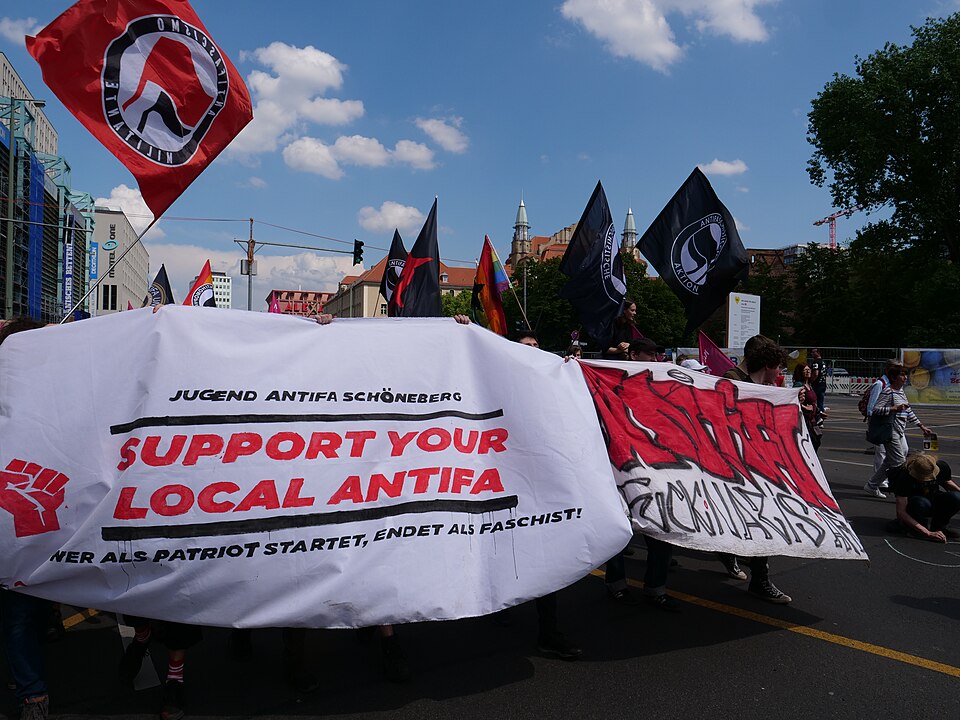
That creates a problem that should be familiar by now. A label can describe something real while still being used so broadly that it stops telling us very much about the individual being labeled. Someone can identify with anti-fascist politics without belonging to the same organization, sharing the same tactics, or supporting the same political objectives as another person who uses the label. Likewise, someone can participate in a protest where another participant identifies as antifa without personally adopting that identity. The existence of people who commit violence under a particular political label does not establish that every person associated with the broader label supports or participates in that violence.
The reverse is also true. We should not pretend that a political label becomes meaningless simply because the people using it are decentralized. If individuals identifying with antifa commit violence, threaten political opponents, or destroy property, those actions can be examined on their own terms. The absence of a centralized organization does not make an individual's conduct disappear.
The challenge is to describe what actually happened rather than allowing the label to do all the thinking for us.
A Label Can Become a Weapon
American political history is full of labels that became shorthand for entire categories of people. “Loyalist,” “abolitionist,” “Copperhead,” “anarchist,” “communist,” “radical,” “subversive,” “fascist,” and “socialist” have all been used at different times not merely to describe political beliefs but to question whether the people holding those beliefs belonged within the acceptable boundaries of American political life.
Sometimes the label was reasonably descriptive.
Sometimes it was deliberately exaggerated.
Sometimes it was simply wrong.
And sometimes a label that began as a meaningful political description became a way of avoiding the harder work of asking what a particular person actually believed.
That is one of the dangers of modern political language. Once someone has been placed into a category, we can begin responding to the category rather than the person.
You no longer have to listen to what they said.
You already know what “people like that” supposedly believe.
The Problem of Guilt by Association
This becomes particularly dangerous during periods of political unrest.
Imagine that a person attends a demonstration. Another person at the demonstration breaks a window. Someone else attacks a police officer. A third person posts an inflammatory statement online. The first person may have done none of those things.
Yet political arguments often move quickly from “someone associated with this movement committed violence” to “this movement is violent” and then to “everyone associated with this movement is dangerous.”
That progression is not inevitable, but it is common enough to deserve scrutiny.
The same problem can happen with virtually any political movement. A violent participant at a conservative rally does not automatically make every conservative at the rally violent. A violent participant at a progressive demonstration does not automatically make every progressive demonstrator violent. The relevant question is whether the individual participated in, supported, encouraged, or facilitated the conduct in question.
That is a much more demanding standard than guilt by association.
It is also a standard we should want applied to ourselves.
When “Fascist” Stops Meaning Fascist
There is an additional problem with political labeling: words lose their usefulness when they become insults rather than descriptions.
Calling someone a fascist should communicate something about that person's political beliefs or conduct. If instead the word simply means “person whose politics I strongly oppose,” it no longer helps us understand anything.
The same problem exists with words such as “communist,” “socialist,” “extremist,” “terrorist,” “radical,” or “authoritarian.” Some have specific historical or legal meanings. Others are broader political descriptions. Some are frequently used rhetorically without careful attention to their actual definitions.
A serious political discussion requires us to distinguish among them.
If someone actually advocates political violence or authoritarian government, describe the specific evidence. If someone supports a particular economic system, identify the system. If someone belongs to an organization, establish the membership. If someone commits a crime, describe the crime.
The label should follow the evidence.
It should not replace it.
The Internet Makes This Worse
Social media is particularly well suited to political labeling because labels travel faster than explanations.
A twelve-word post can describe someone as a fascist, communist, terrorist, Nazi, Marxist, extremist, traitor, or radical. The reader may never see the original statement that supposedly justified the label. A screenshot can circulate without context. A short video clip can be detached from what came before and after it. A person can be associated with someone else through a photograph or shared event and suddenly become part of a controversy they never intended to join.
This is one of the ways modern cancel culture differs from the historical examples in Part I.
Americans have always used labels as political weapons.
Now we have machines that can distribute those labels to millions of people before anyone has time to ask whether they are accurate.
The result can be a kind of digital guilt by association.
The Consistency Test
The solution is not to stop criticizing political movements.
It is to apply the same evidentiary standard regardless of which movement we are discussing.
If someone on the political left commits violence, identify the person and the conduct. If someone on the political right commits violence, do the same. If an organization encourages violence, establish that connection. If an individual merely attended a demonstration where someone else committed violence, do not automatically assign the other person's conduct to them.
And when someone uses a political label, ask what they mean by it.
That question can be surprisingly revealing.
If you call someone a fascist, what specifically are you referring to? If you call someone a communist, what specifically are you referring to? If you call someone an extremist, what conduct or beliefs justify the description?
If you call someone antifa, what evidence establishes that they actually identify with or participate in anti-fascist activism? These are not semantic games. They determine whether we are describing people or simply sorting them into enemies.
When the Label Becomes the Punishment
This brings us back to cancel culture.
Sometimes the label itself becomes the mechanism for punishment. Someone is identified as a “Nazi,” “fascist,” “racist,” “communist,” “terrorist sympathizer,” or some other category. The label spreads. Employers are contacted. Institutions are pressured. Friends are encouraged to distance themselves. Customers are encouraged to boycott. The person's actual statement may become almost irrelevant because the label has already determined how everyone is supposed to interpret it.
That does not mean every campaign involving a political label is illegitimate. Sometimes people really do expose misconduct or identify genuinely dangerous beliefs. Sometimes a person's own words and actions clearly establish the description being used.
The question is whether the accusation is supported by evidence and whether the consequences being demanded are proportionate to what actually happened.
Those are questions worth asking even when the target is someone you dislike.
Especially then.
We Need Categories Without Losing People
A functioning democracy needs political categories. We need words to describe ideologies, movements, organizations, and forms of conduct. Without them, political discussion becomes almost impossible.
But categories should help us understand people, not eliminate the need to understand them.
That may be one of the most important lessons in the entire cancel-culture debate. When we reduce a person to a label, we make it easier to dismiss everything they say. When we reduce a movement to its worst participant, we make it easier to dismiss everyone in it. When we reduce our political opponents to enemies, we make compromise appear like betrayal.
And when compromise becomes betrayal, disagreement itself begins to look illegitimate. That is where this article is ultimately heading. Because the danger is not that Americans disagree too much.
The danger is that we may eventually decide that people who disagree with us should not have an equal place in the argument.
And once we start thinking that way, the question becomes much bigger than antifa, Black Lives Matter, the Tea Party, or any other movement.
It becomes a question about whether Americans still believe that political opponents are legitimate members of the same country.
The next controversy—the fiercely contested politics surrounding Israel and Palestine—will put that question under even greater pressure.
The Israel/Palestine Protest Question
Few political subjects demonstrate the difficulty of this article better than the American debate over Israel and Palestine. Since the October 7, 2023 attack by Hamas and the ensuing war in Gaza, American campuses, city streets, workplaces, cultural institutions, and social-media platforms have become battlegrounds over questions of war, civilian life, antisemitism, Islamophobia, Palestinian rights, Israeli security, free speech, and political power. Demonstrations have occurred on both sides, while universities and other institutions have struggled to balance protest rights with concerns about harassment, threats, disruption, and the safety of students and employees. Rutgers, for example, recorded reported incidents involving both antisemitism and anti-Arab bias during the 2024–25 academic year, illustrating how the conflict has affected campus communities in ways that cannot be reduced to a single political narrative.
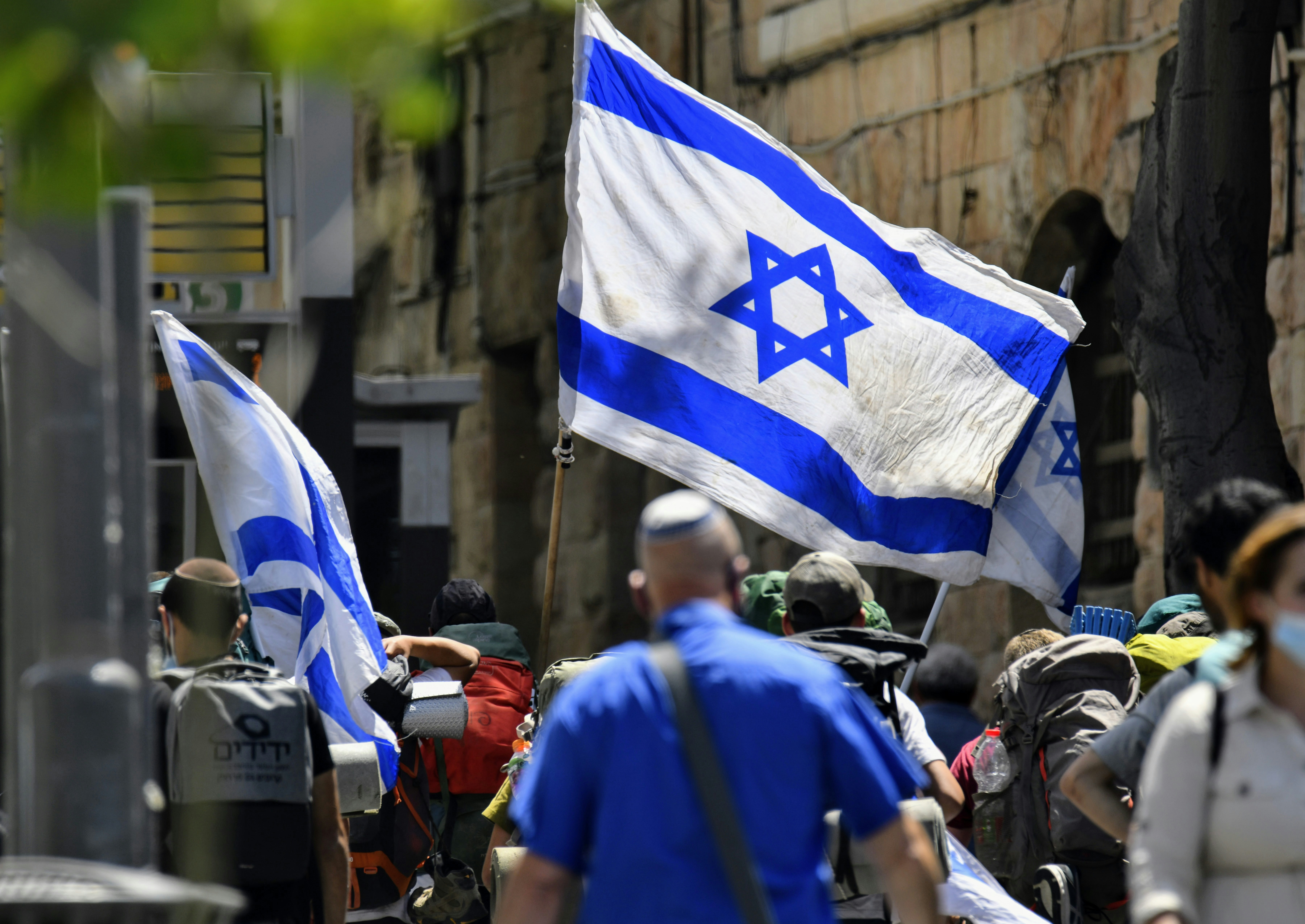
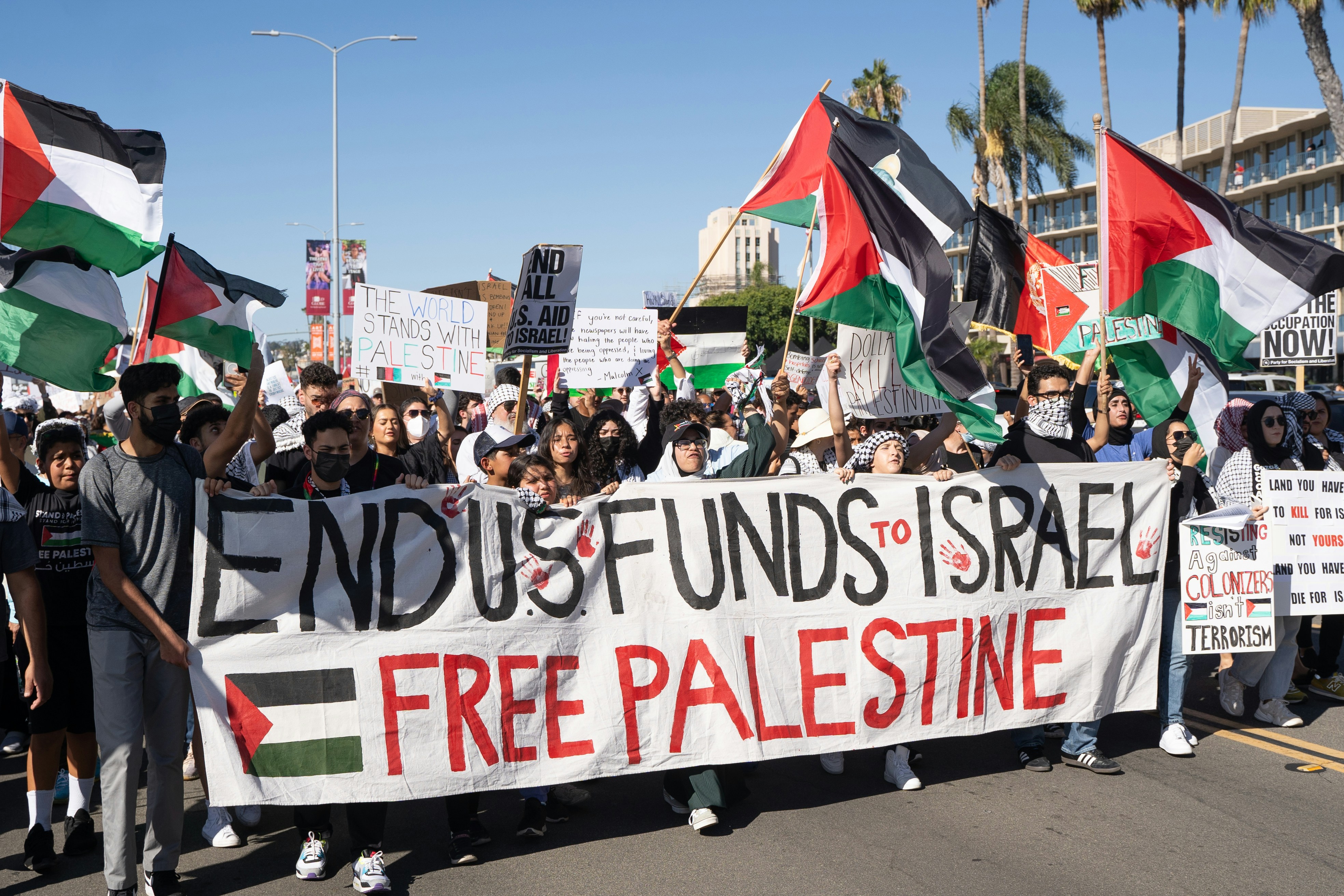
That complexity is exactly why this subject belongs here. It is tempting to divide the argument into two teams and then decide which team is behaving properly. But the history we have examined makes that approach inadequate. A person can support Palestinian rights without supporting Hamas. A person can support Israel's right to exist and defend itself without supporting every action of the Israeli government. A person can condemn antisemitism while supporting Palestinian political expression, just as a person can oppose antisemitism and also believe that some rhetoric presented as criticism of Israel crosses into antisemitism. Likewise, criticism of Israeli policy is not automatically antisemitic, and advocacy for Palestinian rights is not automatically evidence of support for Hamas.
The distinctions are not academic. They determine whether we are actually talking about a person's beliefs or simply assigning them to a political category.
When Protest Meets Fear
The campus protests that spread across the United States in 2024 provide a particularly useful example because they brought nearly every question in this article into one environment. Students organized demonstrations and encampments in support of Palestinians. Universities responded with their own rules concerning demonstrations, access to buildings, academic operations, and campus safety. Police were called onto some campuses to clear encampments or enforce institutional rules. Jewish students and organizations raised concerns about antisemitism and safety, while Palestinian and pro-Palestinian students and organizations raised concerns about discrimination, intimidation, and suppression of political expression. Free-speech organizations challenged some university restrictions while also acknowledging that universities have responsibilities to protect students from unlawful harassment and threats. Rutgers, for example, publicly described its response as an effort to protect students and property while enforcing university policies, and separately reported addressing incidents involving both Jewish and Muslim communities.
The important point is that these concerns can exist simultaneously.
A Jewish student can genuinely feel threatened by antisemitic rhetoric without every pro-Palestinian protester being antisemitic. A Palestinian student can genuinely feel targeted or silenced without every criticism of a protest being an attempt to suppress Palestinian rights. A university can have legitimate concerns about disruption without having unlimited authority to prohibit political speech. A protester can have a constitutional right to express a political opinion without having an unlimited right to occupy a particular building or prevent other students from using university facilities.
Again, the line matters.
Consider the basic right to protest. If students are protesting a war you oppose, do you believe they should be allowed to express themselves peacefully? Now reverse the politics. If students are protesting a war you support, do you still believe they should be allowed to express themselves peacefully?
The answer should not depend entirely on whether you approve of the message.
That does not mean every protest tactic deserves protection. A university can establish reasonable rules concerning time, place, and manner. Students do not acquire a right to threaten other students, vandalize property, assault people, or prevent a university from functioning simply because they are engaged in political advocacy. The First Amendment protects expression, not every action performed in the name of expression.
But the opposite error is equally dangerous: treating an unpopular political message as sufficient justification for eliminating the protest itself.
The question should be what the protesters are actually doing.
This is where the subject becomes particularly sensitive. Antisemitism is real, and American political discourse surrounding the Israel-Palestine conflict has included documented antisemitic rhetoric and incidents. Rutgers' reported campus data, for example, recorded 58 incidents classified as involving shared ancestry/antisemitism during the 2024–25 academic year, compared with 31 classified as anti-Arab. Those are reports received by the university, not a measurement of all antisemitic or anti-Arab conduct, and they should not be interpreted as a complete survey of campus attitudes.
At the same time, organizations and scholars have sharply disagreed about how particular statements should be classified. Some argue that accusations of antisemitism have sometimes been used too broadly against people criticizing Israeli government policy or advocating Palestinian rights. Others argue that certain rhetoric presented as political criticism relies on longstanding antisemitic stereotypes or effectively denies Jewish people rights or security that the speaker would recognize for others. Those disagreements should be examined case by case rather than resolved through a blanket rule.
That distinction is essential.
Calling every criticism of Israel antisemitic makes the term less useful. Pretending antisemitism disappears whenever someone describes their statement as political criticism makes the term equally useless. The evidence has to come first.
The same principle applies in the other direction. Advocating for Palestinian rights is not automatically support for Hamas. Calling for Palestinian self-determination is not automatically advocacy for terrorism. Criticizing Israeli military operations is not automatically hatred of Israelis or Jews.
But again, the reverse distinction matters. If someone explicitly supports attacks on civilians, celebrates terrorism, or advocates violence against people because of their nationality or religion, calling that merely “political protest” does not make the underlying conduct disappear.
A serious discussion therefore requires us to ask what someone actually said and what they actually meant. That sounds obvious.
In an environment built around political labels, it is surprisingly difficult.
When Government and Private Power Get Involved
The stakes become even higher when the government enters the controversy. In March 2025, federal immigration authorities arrested Mahmoud Khalil, a Columbia University graduate and lawful permanent resident who had been involved in negotiations representing pro-Palestinian protesters during the 2024 campus demonstrations. His attorneys argued that the government had detained him because of his political advocacy and that the action violated the First Amendment and due-process protections. The administration disputed the legal and factual characterization of the case, and litigation followed. Khalil was later released after more than three months in immigration detention, with a federal judge citing potential free-speech concerns in the government's deportation case.
That case is important for this article because it moves us beyond private cancellation. A university disciplining a student is one question. A concert promoter removing a performer is another. An employer firing an employee is another. The federal government detaining or seeking to remove a person because of political advocacy is a fundamentally different level of governmental power, particularly when First Amendment protections are implicated.
The legal proceedings over Khalil's case have continued, and courts have issued rulings addressing the administration's actions. The point here is not to declare a final legal conclusion where litigation and competing arguments remain. The point is that once government authority is used against political activists, the Nixon Test becomes relevant again: Would we defend the same governmental power if it were being used against activists whose politics we support?
The Israel-Palestine conflict also brings us back to the economic pressure we examined earlier. Americans can boycott companies because they support Israel. Americans can boycott companies because they support Palestinians. Universities can face pressure over investments. Artists can face pressure over statements. Consumers can decide where their money goes. Organizations can campaign for divestment. Those are familiar forms of political and economic pressure.
But once again, the mechanism matters. A consumer deciding not to purchase a product is different from threatening an employee. A university deciding how to invest its own funds is different from the government prohibiting citizens from buying from a particular company because of their political beliefs. A protest outside a business is different from vandalizing the business.
The same political controversy can therefore produce conduct on completely different sides of the legal and moral line.
The recent controversy involving Macklemore demonstrates this distinction particularly clearly. In September 2026, he was removed from the U.S. portion of Ed Sheeran's tour after venue owners objected to his pro-Palestinian statements. The tour promoter said the decision followed venue concerns, while Macklemore attributed the removal to political pressure from pro-Israel activists. Sheeran subsequently said the decision was not his and that he wanted his concerts to remain focused on music.
Whatever one thinks about Macklemore's statements, the mechanism here is important. This was a private professional decision, not a government order banning Macklemore from performing.
That does not mean nobody is entitled to criticize the decision. They absolutely are. Macklemore's supporters can argue that he was punished for political speech. His critics can argue that venues and promoters have the right to decide whom they want performing at their events. Consumers can decide whether they want to attend the concerts or support the organizations involved.
But calling the event “government censorship” would require evidence that the government actually exercised governmental authority to produce the result.
The distinction is the entire point.
When Everything Becomes “Cancel Culture”
This is where the term begins to break down. A student being arrested by government authorities is not the same thing as a musician being dropped from a private concert tour. A university enforcing neutral rules against an encampment is not automatically the same thing as a university banning a political viewpoint. A consumer boycott is not the same thing as a government prohibition. A protester's offensive statement is not automatically a threat. A criticism of Israel is not automatically antisemitism. A defense of Israel is not automatically Islamophobia. And a disagreement over any of these questions does not automatically make the person on the other side an extremist.
If we collapse all of these categories into “cancel culture,” we lose the ability to determine which form of power is actually being exercised.
And that is dangerous because the remedy depends upon the problem.
Private censorship may be answered with criticism, consumer pressure, or competition. Government censorship may require constitutional litigation. Harassment may require institutional intervention. Violence requires law enforcement. Political disagreement requires political argument.
The answer cannot be the same for all four.
The Israel-Palestine debate therefore provides perhaps the clearest modern version of our recurring test. If you believe pro-Palestinian protesters should be allowed to speak, would you defend the right of pro-Israel protesters to speak? If you believe universities should protect Jewish students from antisemitic harassment, would you also defend Palestinian students against anti-Arab harassment? If you believe criticism of Israeli government policy should be protected, would you defend criticism of Hamas and Palestinian political organizations? If you believe government should not punish political advocacy, would you defend that principle when the advocacy makes you furious? And if you believe private institutions should be free to decide whom they associate with, would you defend that principle when they exclude someone whose politics you support?
The answers do not have to erase disagreement.
They do have to be consistent.
Perhaps the most important lesson from this conflict is that political disagreement becomes particularly dangerous when every disagreement is interpreted as evidence of moral corruption. If someone criticizes Israel, they must hate Jews. If someone supports Israel, they must hate Palestinians. If someone supports Palestinian rights, they must support Hamas. If someone condemns Hamas, they must support everything Israel does.
Those assumptions make political conversation almost impossible because they remove the possibility of holding a complicated position. And complicated positions are often the honest ones.
A person can believe that Hamas committed atrocities and that Palestinian civilians deserve protection. A person can believe Israel has a right to security and that particular Israeli government policies deserve criticism. A person can oppose antisemitism and Islamophobia simultaneously. A person can believe in Palestinian self-determination while rejecting terrorism. A person can believe in Israeli security while opposing particular military actions.
None of those positions requires abandoning principles.
What requires abandoning principles is deciding that the rights of other people depend upon whether we like their politics.
That is the danger this entire article has been building toward. Because once political identity determines whose speech deserves protection, whose protest deserves tolerance, whose suffering deserves sympathy, and whose mistakes deserve punishment, we have stopped applying principles. We have started applying membership rules.
And a country cannot remain genuinely united for very long if belonging depends upon passing an ideological test.
When Words Become Weapons
By now, we have spent a lot of time talking about pressure: economic pressure, social pressure, institutional pressure, political pressure, and government power. But there is another form of power that runs through nearly every example in this article, and it is the easiest one to underestimate because it costs almost nothing to use. Words can persuade, organize, shame, intimidate, inspire, dehumanize, and sometimes encourage people to do things they otherwise might not have done. The printing press made political persuasion scalable in the eighteenth century. Newspapers made it faster in the nineteenth. Radio and television made it immediate for a national audience in the twentieth century. Social media has now made nearly everyone a potential publisher.
That does not mean words are weapons in the literal sense, and it certainly does not mean offensive speech should automatically be treated as dangerous conduct. The First Amendment protects a remarkably broad range of expression, including speech that is unpopular, disturbing, offensive, or deeply insulting. In a democracy, that protection is especially important when the speech concerns government, politics, religion, or other matters of public concern. The fact that speech makes people angry is not, by itself, a reason for government to prohibit it.
But saying that words are protected does not mean saying that words are powerless. Words can have consequences without becoming crimes. A political speech can persuade someone to vote, a pamphlet can convince someone to join a movement, a boycott campaign can persuade consumers to change where they spend their money, and a journalist can expose wrongdoing. The same basic tools can also be used differently: propaganda can spread false information, political rhetoric can portray opponents as enemies, conspiracy theories can encourage people to distrust institutions or individuals without evidence, and dehumanizing language can make it easier to regard political opponents as deserving of exclusion or punishment.
Political speech is one of the mechanisms through which citizens exercise power. A campaign speech can persuade voters, a protest sign can communicate an argument to thousands of people, and a social-media post can bring attention to an injustice that might otherwise have gone unnoticed. Throughout American history, movements have depended upon the ability to communicate their arguments beyond the people physically present in the room. The abolitionists used newspapers and pamphlets, suffragists organized through publications and public speeches, Civil Rights activists used churches and mass media, and Vietnam protesters learned to communicate with a national television audience.
The same tools can be used for purposes that are far less constructive. Political rhetoric can portray opponents as enemies, conspiracy theories can circulate claims without adequate evidence, and inflammatory language can make political opponents appear less like fellow citizens and more like threats that must be defeated. That does not mean every harsh political statement leads to violence; most do not. It means that language contributes to political culture, and political culture can influence how Americans understand one another.
The challenge is that these things exist on a continuum, while the law does not simply divide speech into “good speech” and “bad speech.” Some expression receives strong constitutional protection even when it is offensive. Other forms of communication can fall outside constitutional protection or trigger legal consequences, depending on the circumstances, including true threats, certain forms of incitement, defamation, and other unlawful conduct. The exact legal boundaries are complicated and highly dependent on context, which is why saying that someone “said something dangerous” is not enough; we have to ask what they actually said and what the surrounding circumstances were.
This distinction is particularly important in the age of social media because Americans increasingly encounter political speech through short clips, screenshots, headlines, and posts stripped of context. Someone says something offensive, someone becomes angry, a campaign begins, the person's employer receives hundreds of messages, and suddenly the controversy becomes national news. It is tempting to conclude that the original statement must have been beyond the bounds of acceptable speech simply because the reaction was enormous, but public outrage is not a legal standard and it is not necessarily a moral one.
Americans have been offended by political speech since the beginning of the republic. Abolitionists offended people who defended slavery, suffragists offended people who believed women should not vote, Civil Rights activists offended people who believed segregation should continue, and antiwar protesters offended people who believed opposing the war was disloyal. If offense alone were sufficient grounds for suppressing political expression, a great deal of American political history could never have happened.
That does not mean every statement deserves approval or that people are required to listen. People can criticize speech, challenge it, refuse to associate with the speaker, organize against the speaker's ideas, or persuade others not to support the speaker. The distinction is that disagreement and social pressure are different from using government authority to prohibit protected political expression.
At the same time, we should not go too far in the other direction. A credible threat is not simply an unpopular opinion, and the First Amendment does not make every statement constitutionally protected merely because the speaker describes it as political speech. There is an important difference between saying, “I think this politician is destroying the country,” and communicating a credible threat to attack that politician; there is also a difference between saying, “I despise this journalist,” and threatening that journalist with physical harm.
The same distinction applies to incitement and other forms of unlawful conduct. The legal question is not simply whether the words were offensive or whether someone felt threatened by them. Courts consider the circumstances, the nature of the communication, the context, and other factors when determining whether speech falls outside constitutional protection. Those distinctions protect legitimate political criticism while also recognizing that the First Amendment is not a blanket immunity for threats or unlawful conduct.
That balance is important because an overly broad definition of dangerous speech can become a weapon against legitimate political expression. If every angry political statement can be classified as a threat simply because somebody finds it frightening or offensive, political speech becomes vulnerable to suppression. The line therefore has to be based on evidence and established legal standards rather than simply on how much a particular audience dislikes what was said.
There is another category that is harder to regulate legally but important to understand historically: dehumanization. Americans have repeatedly described political opponents as something less than fellow citizens. During periods of intense conflict, opponents have been portrayed as traitors, animals, invaders, parasites, enemies, or existential threats. Once the opposing group is no longer understood as a collection of human beings with whom we disagree, the moral barriers against mistreating them can become weaker.
This does not mean that every harsh political insult leads to violence, because most do not. It means that political language can contribute to an environment in which increasingly extreme responses begin to seem acceptable. The historical record gives us plenty of examples in which propaganda and political action reinforced one another. The Boston Massacre engraving discussed in Part I was not simply artwork; it was an attempt to shape how Americans understood an event. Political newspapers during the Civil War did not merely report disagreement; they helped define loyalty and disloyalty. Modern social media performs the same basic function at extraordinary speed.
The medium changed, but the human capacity to turn words into political weapons did not.
This brings us to one of the hardest questions in the article: who gets to decide when speech has gone too far? The government can make that determination through laws and courts, but giving government broad authority over political speech creates obvious dangers of censorship and political retaliation. Private employers, universities, social-media companies, and other institutions can establish their own rules, but those institutions also possess enormous power over people's professional and social lives.
The public can make its own decisions as well. Americans can criticize a speaker, boycott a business, refuse to attend an event, or organize against an organization. That brings us back to the tradition we have been examining since the Revolution: citizens using collective pressure to influence one another without necessarily invoking government coercion.
There is no single answer because these are different forms of authority. The important thing is whether we can recognize the difference between them and resist the temptation to treat every exercise of power as though it were the same thing.
The Consistency Test for Speech
This is where the temptation to abandon principle becomes especially strong. Think about the political statement that makes you angriest—not the one you mildly disagree with, but the one that makes you want to reach through the screen and shut the person up. Now imagine that someone on the opposite political side says it. Would you still defend the principle that political speech deserves protection, or would you suddenly discover that this particular speaker is too dangerous, too offensive, too irresponsible, or too influential to be allowed to say it?
There may be circumstances in which speech genuinely crosses a legal line. There may also be circumstances in which a private institution reasonably decides that an employee's speech violates a lawful workplace policy or that a speaker is not appropriate for its platform. Those conclusions should be based on the actual circumstances rather than beginning with the assumption that people we dislike deserve fewer rights.
The Consistency Test therefore does not ask whether you like the speaker. It asks whether your principle survives when the speaker is someone whose politics you find repugnant.
There is an uncomfortable truth about free speech that Americans often forget: if speech is genuinely free, some of it will be awful. Some of it will be ignorant, offensive, cruel, dishonest, politically radical, or deeply unpopular, and some of it will be directed at you. That is part of the price of protecting expression in a society where government does not get to determine which political ideas are acceptable.
The alternative is to give somebody the authority to decide which ideas are sufficiently acceptable to be heard. That authority may feel comforting when someone you dislike is holding it, but it becomes considerably less comforting when someone you fear is holding it. This is one reason the American constitutional tradition places such a high value on protecting political expression from government interference.
But freedom of speech does not require freedom from criticism. You can answer speech with more speech, challenge it, expose falsehoods, boycott the speaker, persuade people not to listen, organize against the speaker's ideas, or vote against politicians who express them. What you cannot automatically do is transform your personal offense into a claim that everyone else must be prevented from hearing the person.
There is a balance here that the modern debate often misses. Free speech does not mean speech is consequence-free, but consequences are not all the same. A person who says something offensive may lose followers, a consumer may stop buying their work, an employer may decide the statement violates a lawful workplace policy, or a university may impose consequences under its established rules.
The government, however, operates under constitutional constraints that private actors generally do not. That is why the question “Should there be consequences?” is incomplete. We have to ask what the consequences are, who imposes them, what conduct produced them, what authority exists for imposing them, and what protections the person being punished has.
Those questions may make the conversation slower, but they also make it much harder to confuse accountability with retaliation.
Perhaps the greatest danger is not that Americans will stop talking. It is that we will start believing certain Americans should not be allowed to talk because of who they are. Once the political identity of the speaker becomes more important than the content of the speech, the argument has shifted from “I disagree with you” to “You should not be permitted to participate.”
That brings us back to the question underneath this entire article. How much disagreement can a democracy tolerate? The answer cannot be “none,” because America was built on disagreement and has repeatedly changed because people were willing to challenge ideas that other Americans considered settled. The harder question is what happens when disagreement becomes so intense that Americans stop viewing one another as legitimate participants in the same political community.
That is where we move from speech to something more dangerous. Disagreement can become polarization, polarization can become delegitimization, and when political opponents are no longer regarded as legitimate, the entire democratic system begins to change.
And that is the point at which the question of cancel culture becomes larger than any individual controversy. The examples in this section have involved individuals, crowds, universities, corporations, political movements, consumers, employers, media organizations, and government. They do not all possess the same kind of power, and they do not operate under the same rules. But every example has forced us to ask the same basic questions: Who is exercising power? What kind of power is it? What authority does that person or institution actually possess? And are we willing to defend the same principle when the political identities are reversed?
Those questions matter because disagreement itself is not a failure of democracy. In many cases, disagreement is evidence that democracy is functioning. Americans are supposed to argue about government, policy, religion, morality, history, and the direction of the country. We are supposed to challenge one another, organize against one another, persuade one another, protest against one another, and sometimes lose arguments we believed we could not afford to lose.
The danger begins when disagreement stops being understood as a normal part of democratic life. When political opponents become enemies rather than fellow citizens, criticism can become exclusion, political pressure can become retaliation, and the desire to defeat an idea can become a desire to silence the people who hold it. At that point, the question is no longer simply who gets canceled.
The question is whether Americans can still disagree with one another without deciding that the other side has forfeited its place in the country.
Research & Sources
Part II draws on primary government records, constitutional and judicial materials, institutional records, and contemporary reporting. The sources below support the factual and historical claims in Sections 17–28; the article's interpretations, comparisons, and Consistency Tests are Edward A. Wilson's analysis.
Research status: final production source ledger • Updated October 7, 2026
Constitutional & Legal Framework
U.S. Constitution — First Amendment
The constitutional starting point for the article's distinction between government action and private pressure: speech, press, assembly, and petition are protected against governmental abridgment.
Used in: Sections 17, 19, 20, 27, 28
View constitutional text →U.S. Constitution Annotated — State Action & Free Speech
Congressional Research Service / Library of Congress discussion of the state-action requirement and the distinction between governmental and private conduct.
Used in: Sections 17, 19, 20
View constitutional analysis →New York Times Co. v. United States, 403 U.S. 713 (1971)
The Pentagon Papers case, used for the article's discussion of government efforts to restrain publication and the constitutional significance of the press.
Used in: Section 18
Read the decision →Lindke v. Freed, 601 U.S. 187 (2024)
Supreme Court decision addressing when a public official's conduct is attributable to the government, illustrating why labels such as "private" and "government" must be examined carefully.
Used in: Sections 19, 20
Read the decision →Brandenburg v. Ohio, 395 U.S. 444 (1969)
Supreme Court precedent distinguishing protected advocacy from speech directed to and likely to produce imminent lawless action.
Used in: Section 28
Read the decision →Watts v. United States, 394 U.S. 705 (1969)
Supreme Court decision distinguishing a constitutionally protected expression of political opposition from a "true threat."
Used in: Section 28
Read the decision →Nixon, Watergate & the Pentagon Papers
National Archives — Watergate Special Prosecution Force Records
Primary-source finding aids documenting the Watergate investigation, including records identified as the "Enemies List," investigations of political opponents, and related White House activities.
Used in: Section 18
Explore the records →National Archives — Misuse of IRS Records
Archival records concerning the Nixon administration's efforts involving the Internal Revenue Service and political opponents, including files explicitly identified as "Enemies List" material.
Used in: Section 18
Explore the records →National Archives — The Pentagon Papers
The complete declassified "Report of the Office of the Secretary of Defense Vietnam Task Force," including the historical record surrounding its 1971 publication.
Used in: Section 18
Explore the collection →People, Institutions & Political Pressure
U.S. Department of Justice — Paul Pelosi Attack
Federal charging document summary from October 31, 2022 describing the break-in at the Pelosi residence and assault on Paul Pelosi.
Used in: Section 22
View DOJ record →FactCheck.org — Viral Claims About Charlie Kirk's Words
Review of the original October 31, 2022 broadcast and Kirk's comments about the Paul Pelosi attack, including the distinction between calling the attack "awful" and "not right" and arguing about bail.
Used in: Sections 22–23
Read the fact check →Utah Department of Public Safety — Charlie Kirk Shooting at UVU
Official September 10, 2025 account confirming that Kirk was shot while speaking at Utah Valley University and was later pronounced dead.
Used in: Section 23
View official record →Reuters — The Charlie Kirk Purge
Reuters investigation documenting more than 600 Americans who were fired, suspended, investigated, or otherwise disciplined over comments concerning Kirk's assassination.
Used in: Section 23
Read the Reuters investigation →U.S. Supreme Court — Justice Ruth Bader Ginsburg Biography
Official Supreme Court biography confirming Ginsburg's 1993 appointment and her service through September 18, 2020.
Used in: Section 24
View official biography →Pew Research Center — 8 Facts About Black Lives Matter
Research on participation in Black Lives Matter protests and public engagement with the movement.
Used in: Section 25
Read the research →Congressional Research Service — Antifa
Nonpartisan congressional research describing antifa as a decentralized movement and examining its ideological background and tactics.
Used in: Section 26
View CRS report →Campus Speech, Protest & Private Consequences
Rutgers University — Bias Data, 2024–2025
Rutgers reported 156 bias incidents for 2024–25, including 58 classified as shared-ancestry antisemitism and 31 as shared-ancestry anti-Arab. These are reported incidents, not findings that every allegation was substantiated.
Used in: Section 27
View Rutgers data →Rutgers President Jonathan Holloway — Statement on Student Protests
May 6, 2024 statement addressing campus protest, antisemitism, Islamophobia, racism, safety, and the university's response to unrest.
Used in: Section 27
Read the statement →Reuters — Mahmoud Khalil
Reporting on Khalil's March 2025 arrest, his status as a U.S. lawful permanent resident, more than three months in immigration detention, and the federal court proceedings raising First Amendment concerns.
Used in: Section 27
Read the Reuters report →Reuters — Macklemore and Ed Sheeran Tour Controversy
Reporting on Macklemore's removal from Sheeran's U.S. tour following pro-Palestinian remarks and the competing accounts concerning the decision by tour organizers and venue owners.
Used in: Section 27
Read the Reuters report →What Is Source-Based & What Is Analysis?
Higher Ideals does not treat every sentence in an essay as a factual proposition requiring a footnote. Dates, quotations, institutional actions, court decisions, reported incidents, and other externally verifiable claims are grounded in the sources above. The article's comparisons, questions, hypothetical tests, moral judgments, and conclusions are intentionally identified as analysis rather than presented as though a source "proves" them.
This distinction is especially important in Part II. The article is examining competing uses of power; it is not asking the reader to adopt a conclusion merely because a government agency, court, news organization, or political movement says it is true.
Where a source contains an allegation, political characterization, or disputed interpretation, the article treats it as such rather than silently converting the source's characterization into established fact.
Photographs & Image Credits
Images in Part II serve two different purposes: documentary illustration and visual interpretation. Documentary photographs are credited to their original source where independently identified. Illustrative or editorial artwork is not presented as documentary evidence. Higher Ideals does not claim that an image proves an argument simply because it appears beside that argument.
RichardNixon.jpg
Official White House photograph of President Richard Nixon, December 24, 1971. White House Photo Office / National Archives and Records Administration. Public domain.
View image record →Ruth_Bader_Ginsburg_official_portrait.jpg
Official portrait of Justice Ruth Bader Ginsburg. Supreme Court of the United States. Public domain as a U.S. federal government work.
View image record →Black_Lives_Matter_Protest.jpg
Black Lives Matter protest photograph attributed to Johnny Silvercloud, made available through Wikimedia Commons under a Creative Commons Attribution-ShareAlike license.
View image record →Additional documentary photographs
Paul Pelosi, Charlie Kirk, Israel/Palestine, and other documentary photographs in the working image archive were selected for specific editorial purposes. Their individual source records should remain with the corresponding asset in the Higher Ideals production archive; this section does not invent attribution where the original record is not independently recoverable.
Editorial / illustrative artwork
The Part II hero image and several conceptual images (including the puppeteer, power, corporate, consumer, and words illustrations) function as visual interpretation rather than documentary evidence. They are identified by their captions and placement as illustrative material.
Image attribution is intentionally conservative: where the original creator or license could not be verified from the production record, Higher Ideals does not manufacture a credit.